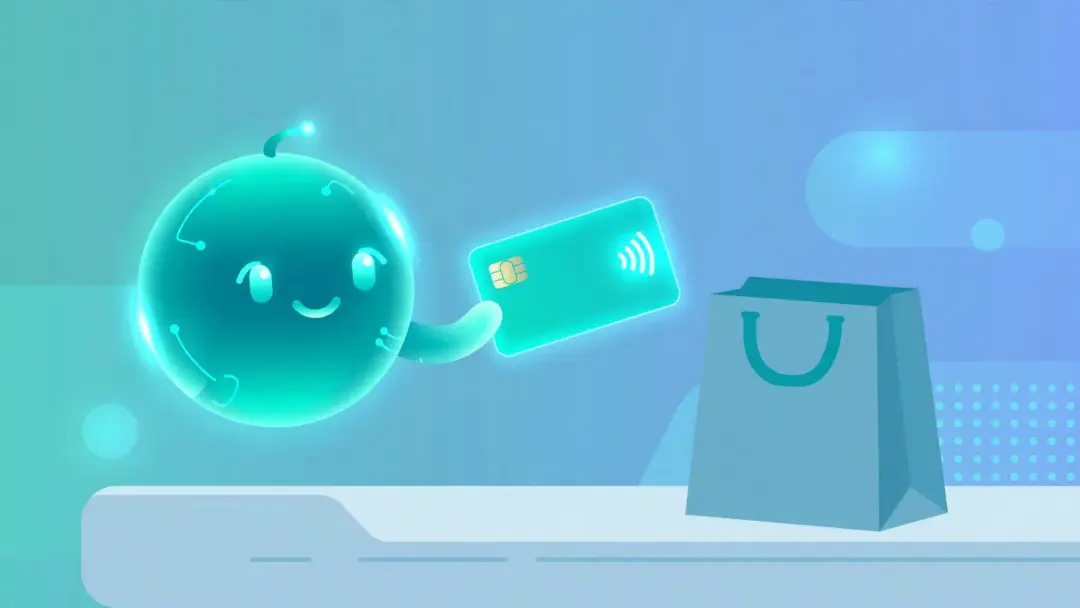
On 13 November 2026, OpenAI announced ChatGPT Wallet — a new feature that lets its AI agents buy things for you. Tell ChatGPT's agent to find a sweater or book a hotel, and it can now complete the purchase itself, without ever seeing your real card number.
It sounds like science fiction, but the idea behind it is simple: an AI that can shop for you needs a way to pay, and handing your card details to a chatbot is a bad idea. ChatGPT Wallet is OpenAI's answer to that problem. Here is how it works, who can actually use it, and what it means for the future of shopping.
What Is ChatGPT Wallet?
ChatGPT Wallet is a payment feature built into ChatGPT. It stores a payment method that OpenAI's agents — called dots — can use to pay for things on your behalf, under rules you control.
OpenAI describes it as "the first wallet that lets agents pay without access to users' actual card details and that requires a security check for every purchase." In plain English: the agent can spend your money, but it never gets to see your card.
The feature was built in partnership with American Express, Mastercard and Visa, the three card networks that issue the payment tokens it relies on.
How a ChatGPT Wallet Purchase Works
The process has four steps, and you stay in control at every one of them:
1. Add a card once. You link an eligible credit card to ChatGPT Wallet. Your card details go into a secure form handled by a payment service provider — OpenAI says it only ever receives a tokenised credential, plus limited details such as the card network, issuer, card type, last four digits and expiry date. It never sees your full card number or security code.
2. Ask the agent to buy something. In a conversation with a dot, you might say "Help me find a new sweater" or "Book me a hotel for my trip to Chicago next weekend." The agent searches, compares options and prepares the order.
3. Review and approve. Before anything is submitted, Wallet shows you the merchant, the items and quantities, the total or maximum price including known taxes, fees and shipping, the card that will be charged, and whether the purchase creates a recurring charge, a deposit or an authorisation hold. You then approve it with a security check such as Face ID or a fingerprint scan on your device.
4. The network issues a token. Once you approve, the card network provides a payment token — a substitute card with its own number, security code and expiry date. The merchant charges that token, not your real card. Neither the agent nor the merchant ever receives your actual card details, and the charge still lands on your real card account.
One detail worth knowing: the number on your receipt may not match the card in your pocket, because the merchant only ever saw the token.
Who Can Use ChatGPT Wallet?
At launch, availability is deliberately narrow:
- ChatGPT Pro subscribers only, rolling out gradually — so even eligible users may not have access yet.
- United States only. You must be 18 or older, live in the US, use Wallet in the US, and have a US billing address.
- Eligible credit cards only. US-issued American Express, Chase, Mastercard or Visa credit cards. Chase cardholders must be the primary cardholder (not an authorised user) and approve the connection through the Chase mobile app.
- No debit cards at launch, and you cannot add your own virtual cards.
- Dots only. Wallet works in conversations with a dot — not in Chat, Work or standalone Codex threads.
OpenAI has not announced a launch date or a country list for anywhere outside the US. It says only that it will "expand availability" after learning from early use. So if you are reading this in Pakistan, the UK or anywhere else, ChatGPT Wallet is not available to you yet — and there is no date to wait for.
What Stays Yours: Rewards, Protection and Control
OpenAI has been careful to stress that a Wallet purchase behaves like an ordinary card payment:
- Your card rewards still apply. Points, cashback and miles work exactly as they would on a normal purchase.
- Dispute protections stay in place. If something goes wrong with an order, the card's normal dispute process applies.
- Every purchase needs your approval. The terms say you must "review and approve each purchase before it is submitted or grant ChatGPT the authority to approve each purchase in advance." You can also let the agent approve purchases in advance — but that is your choice, not the default.
- OpenAI takes no cut. The company confirmed it is not taking a percentage of transactions at launch. Its focus, it says, is on building relationships with online sellers.
- Limits are possible. OpenAI reserves the right to set transaction, merchant, category, card, account, device or geographic limits, and to decline, delay or block a transaction to prevent fraud or to comply with card-network rules.
Wallet does not create a bank account or a stored balance, it does not extend credit, and it does not transfer funds. The merchant is the seller and merchant of record — exactly as in a normal online purchase.
Why Merchants Are Being Asked to Change Too
A purchase made by an agent looks different from a purchase made by a person, and many online stores' security systems are designed to block bots. OpenAI published a Commerce Partner Playbook alongside the launch, asking businesses to keep agents from being blocked, share product feeds, and work with risk and payment providers so legitimate agent purchases are not declined.
It is also working with fraud-prevention firms Forter, Riskified, Sardine and Signifyd, and payment service providers Adyen, Checkout.com and Stripe, so those systems can recognise legitimate agent purchases. OpenAI advised merchants to update firewalls and content delivery networks to recognise signed agent requests through a system called Web Bot Auth.
This is the part most people will never see — but it matters. If stores keep blocking agents, the wallet is useless no matter how clever it is.
ChatGPT Wallet Is Not the First Agent Payment System
OpenAI is joining a race that started earlier in 2026:
| System | Launched | How the agent pays |
|---|---|---|
| Visa Intelligent Commerce | April 2025 | Tokenised digital credentials that confirm the agent is allowed to act for you |
| Mastercard Agent Pay | April 2025 | "Mastercard Agentic Tokens" — the agent is registered and verified before it can pay |
| ChatGPT Wallet | 13 November 2026 | Network payment token issued per purchase, plus a security check (Face ID or fingerprint) on every purchase |
The idea is the same in all three: the agent never holds the real card number. Where ChatGPT Wallet differs is that it is tied to a specific assistant — ChatGPT's dots — rather than being a network-level service any agent can use. Google, for its part, has said Gemini cannot make transactions with Google Wallet, so it is not in this race yet.
What Could Go Wrong?
Agentic payments are new, and the honest answer is that the risks are still being mapped:
- Wrong purchases. An agent can misunderstand a request, pick the wrong size or the wrong date, and the charge is real money. The review screen is the safety net — read it properly before approving.
- Blocked checkouts. Many stores will still decline agent purchases at first, either because their fraud systems flag them or because they have not updated their firewalls.
- Fraud and social engineering. A wallet that lets an AI spend money is an attractive target. The biometric check on every purchase is the main defence — keep it on, and do not grant advance approval lightly.
- Disputes get complicated. If an agent orders the wrong thing, is that your mistake, the agent's, or the merchant's? The card's dispute process still applies, but the conversation will be new territory for banks.
None of this makes ChatGPT Wallet a bad idea. It makes it an early idea — one worth watching closely before trusting it with anything expensive.
The Bigger Picture: AI Is Arriving at the Checkout
ChatGPT Wallet matters less for what it does today — a narrow US-only rollout for Pro subscribers — and more for what it signals. Shopping is moving from "you search, you click, you pay" to "you ask, the agent does the rest." The payment step was the missing piece, and now OpenAI, Visa and Mastercard have all built one.
The same week Wallet launched, the wider AI industry was moving in the same direction: agents booking, buying and paying are becoming normal infrastructure, not a demo. The question is no longer whether AI will shop for us. It is whether the safety checks — the review screen, the biometric approval, the token that hides your card — hold up when millions of people start using them.
For now, the sensible move is simple: if you get access, try it on something small, read every approval screen, and keep the biometric check switched on. Let the agents learn to shop — but keep your hand on the wallet.
Takeaway Checklist
- ChatGPT Wallet launched on 13 November 2026 and lets OpenAI's dots agents pay for things on your behalf.
- The agent never sees your real card number — the card network issues a one-off payment token for each purchase.
- Every purchase needs your approval with a security check like Face ID or a fingerprint.
- It is rolling out gradually to ChatGPT Pro subscribers in the US, aged 18+, with eligible US-issued Amex, Chase, Mastercard or Visa credit cards. No debit cards, no virtual cards.
- Your card rewards and dispute protections still apply, and OpenAI takes no percentage cut at launch.
- It is not available outside the US yet, and OpenAI has given no date for other countries.
- Visa and Mastercard launched their own agent-payment systems in April 2025 — this is a race, not a one-off.
- If you try it: start small, read every approval screen, and do not grant advance approval until you trust it.