The COVID-19 mRNA vaccines were the first of their kind ever widely used — and they worked so well that the scientists behind the key breakthrough, Katalin Karikó and Drew Weissman, won the 2023 Nobel Prize in Physiology or Medicine. But years later, one question keeps coming up: what does the vaccine actually do inside you? The answer is surprisingly simple. An mRNA vaccine contains no virus at all. It contains a tiny message — and your own cells do the rest.
First, what is mRNA?
Every cell in your body already uses mRNA (messenger RNA) constantly. Think of it as a post-it note with building instructions.
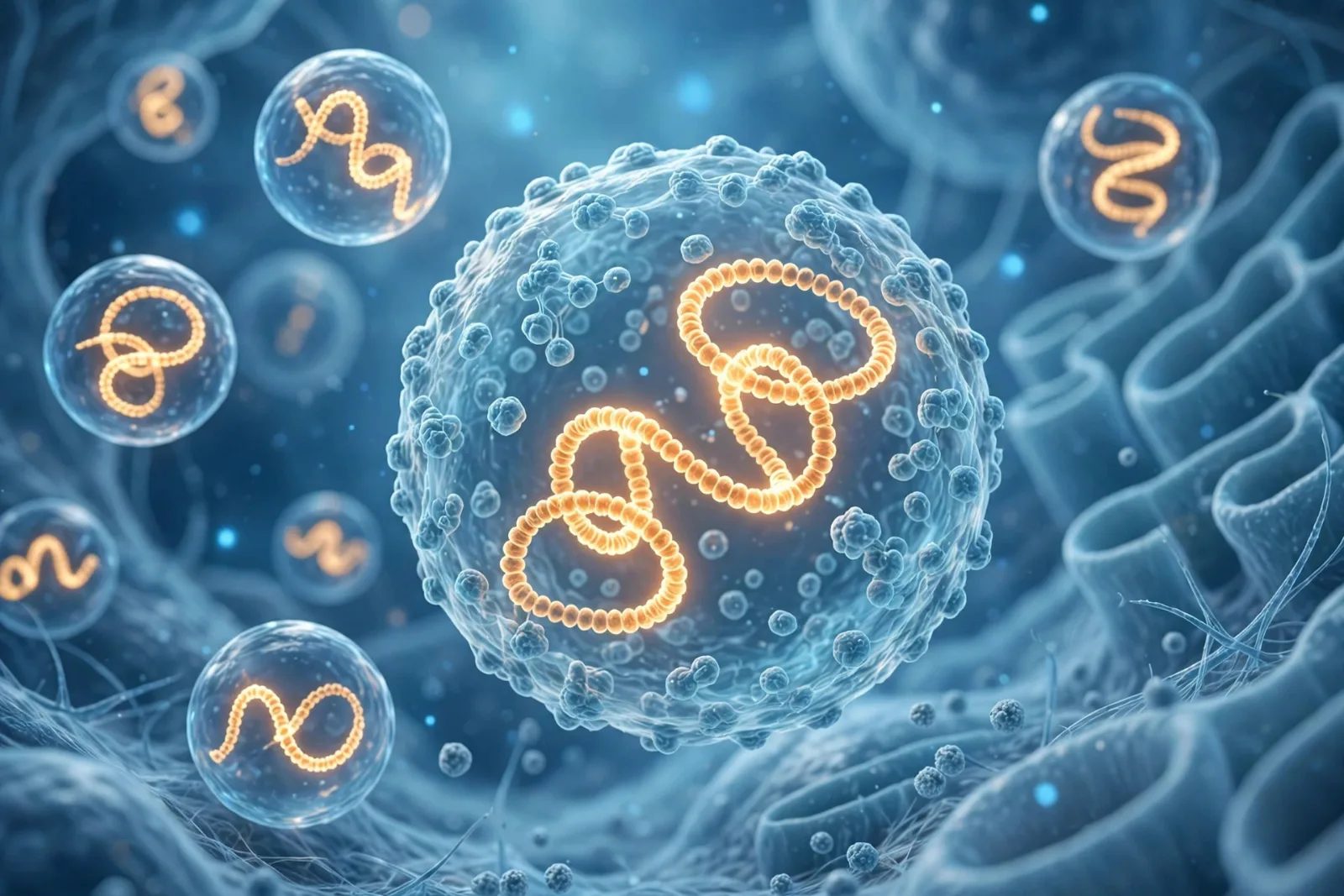
Your DNA is the master blueprint, locked away in the cell's nucleus. When a cell needs to build a protein, it copies a small section of the blueprint onto an mRNA note, carries that note out of the nucleus, and hands it to the cell's protein-building machinery (ribosomes), which read it and build the protein. The note is then thrown away within days — mRNA is deliberately fragile.
That throwaway quality is exactly what makes it useful for a vaccine.
The four steps, in order
Here is what happens after the injection, step by step:
- The message arrives. The vaccine contains mRNA instructions for building just one small piece of the coronavirus: the spike protein — the spiky knob the virus uses to latch onto your cells. Nothing else from the virus is included.
- A fat bubble delivers it. On its own, mRNA would be destroyed before reaching your cells. So it is wrapped in lipid nanoparticles — microscopic bubbles of fat that protect the mRNA and help it slip through cell membranes. This delivery trick was one of the hardest parts to invent.
- Your cells read the note. Nearby muscle cells take up the bubbles, read the mRNA instructions, and build copies of the harmless spike protein. They display it on their surfaces, then degrade the mRNA within a few days, as usual.
- Your immune system learns. Your immune cells notice this unfamiliar protein, build antibodies against it, and store memory cells that remember it. If the real virus ever shows up, your body recognises the spike immediately and attacks before the virus can get a foothold.
Crucially: because only the spike protein is ever made — never the whole virus — an mRNA vaccine cannot give you the disease.
"But does it change my DNA?"
No — and this is not a close call. Here is why:
- The mRNA never enters the cell's nucleus, where your DNA lives. It stays in the outer part of the cell, where the protein-building machinery sits.
- The mRNA is degraded by your body within days. It does not stick around.
- It cannot turn into DNA without a special enzyme (reverse transcriptase) that human cells do not produce on their own.
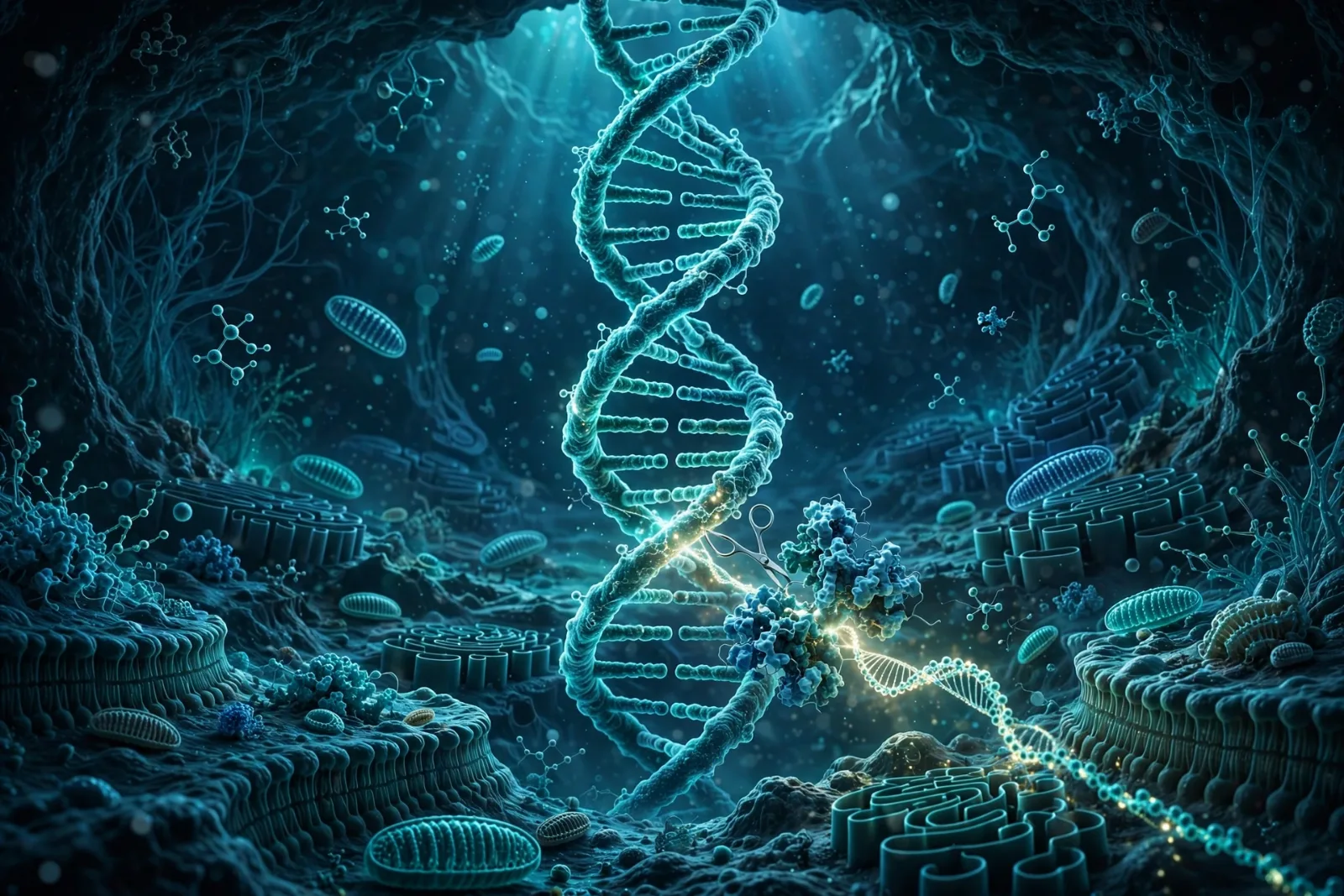
Changing DNA is what CRISPR and gene editing does — a completely different technology, built for a completely different purpose. mRNA vaccines send a temporary instruction; gene editing rewrites the permanent blueprint. Confusing the two is like confusing a post-it note with a deed to the house.
How was it made so fast?
The COVID vaccines looked impossibly fast — the Pfizer-BioNTech vaccine went from idea to US emergency authorisation on 11 December 2020, less than a year after the virus was identified. It showed 95% efficacy in a trial of about 44,000 people. But that speed was built on decades of slow, unglamorous work:
- 1961 — mRNA itself is discovered.
- 2005 — Karikó and Weissman publish the breakthrough on nucleoside base modifications: tweaking the mRNA's chemical letters so the immune system does not destroy it on sight. This is the discovery that earned the 2023 Nobel Prize.
- 2010s — Lipid nanoparticle delivery systems are perfected after years of trial and error.
- 2020 — All the pieces exist, so when the virus's genetic code is published in January 2020, Moderna and BioNTech can design their vaccines within days — they just needed to write a new message.
The vaccine was not rushed; it was pre-prepared. That distinction matters.
mRNA vs traditional vaccines
| mRNA vaccines | Traditional vaccines | |
|---|---|---|
| What's in the syringe | Instructions (mRNA) + fat bubbles | Weakened/inactivated virus, or a protein made in a lab |
| Who builds the antigen | Your own cells, temporarily | Nobody — the antigen arrives ready-made |
| Speed to design | Days, once the pathogen's code is known | Months to years of growing and preparing material |
| Manufacturing | Chemical synthesis — standardised and fast to scale | Biological production — slower, more complex |
Where mRNA goes next
The same platform is now being aimed at far more than COVID. Researchers are testing mRNA vaccines for influenza, RSV, HIV, and malaria, plus personalised mRNA cancer vaccines — where the "message" is customised to the mutations in an individual patient's tumour. AI is accelerating that work by helping design better mRNA sequences faster.
For more on this, see our explainer on brain-computer interfaces.
Takeaway checklist
- ✅ mRNA vaccines contain no virus — just fragile instructions for building one harmless piece of it (the spike protein).
- ✅ Lipid nanoparticles (tiny fat bubbles) protect the mRNA and deliver it into your cells.
- ✅ Your cells read the message, build the protein, show it to your immune system — then the mRNA degrades within days.
- ✅ The mRNA never enters the nucleus and cannot change your DNA — that would require a completely different technology (gene editing).
- ✅ The 2020 speed record was possible because of decades of prior research, crowned by Karikó and Weissman's Nobel-winning 2005 discovery.
- ✅ The real lesson: mRNA is a platform — once the delivery system works, new vaccines can be designed in days, not years.