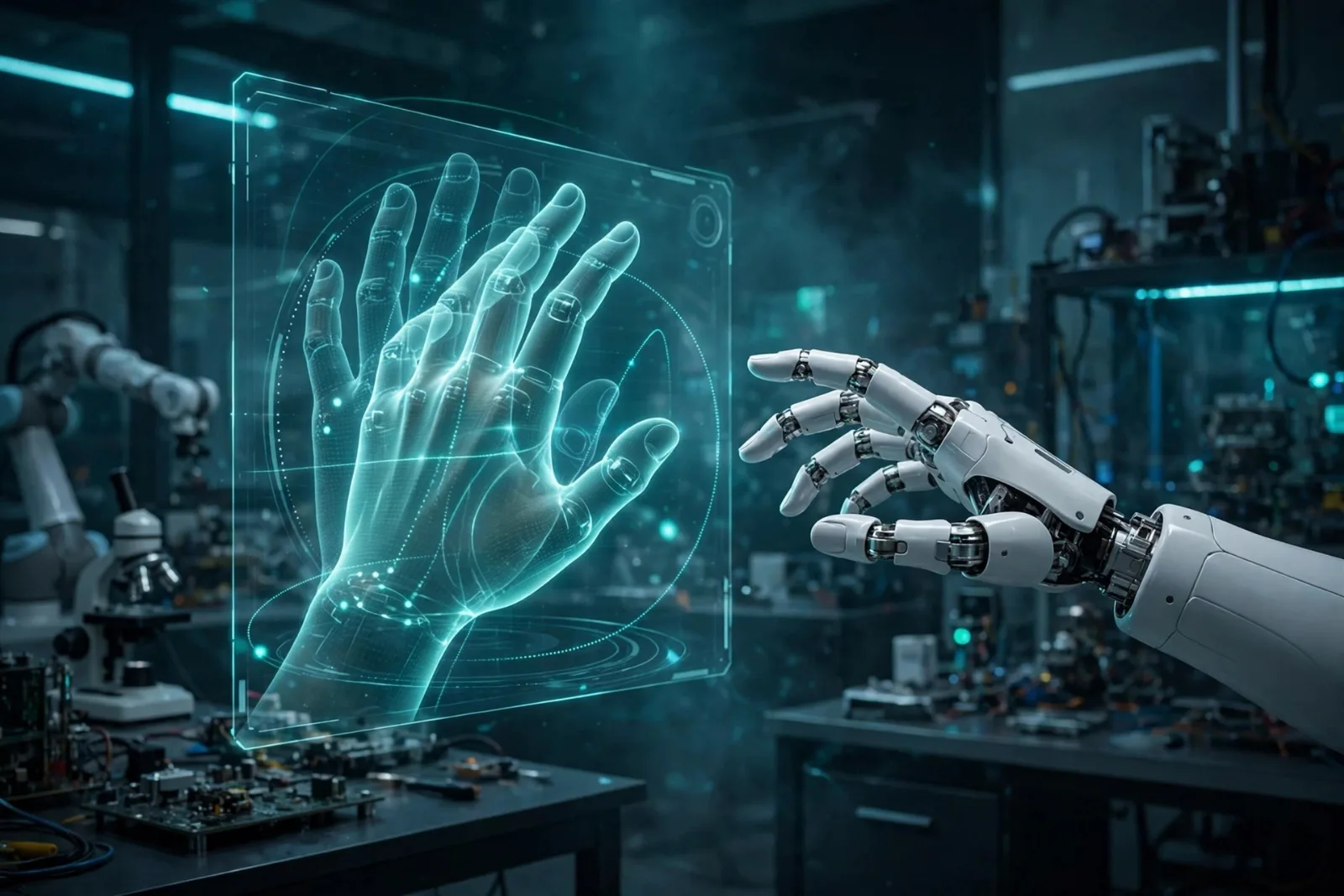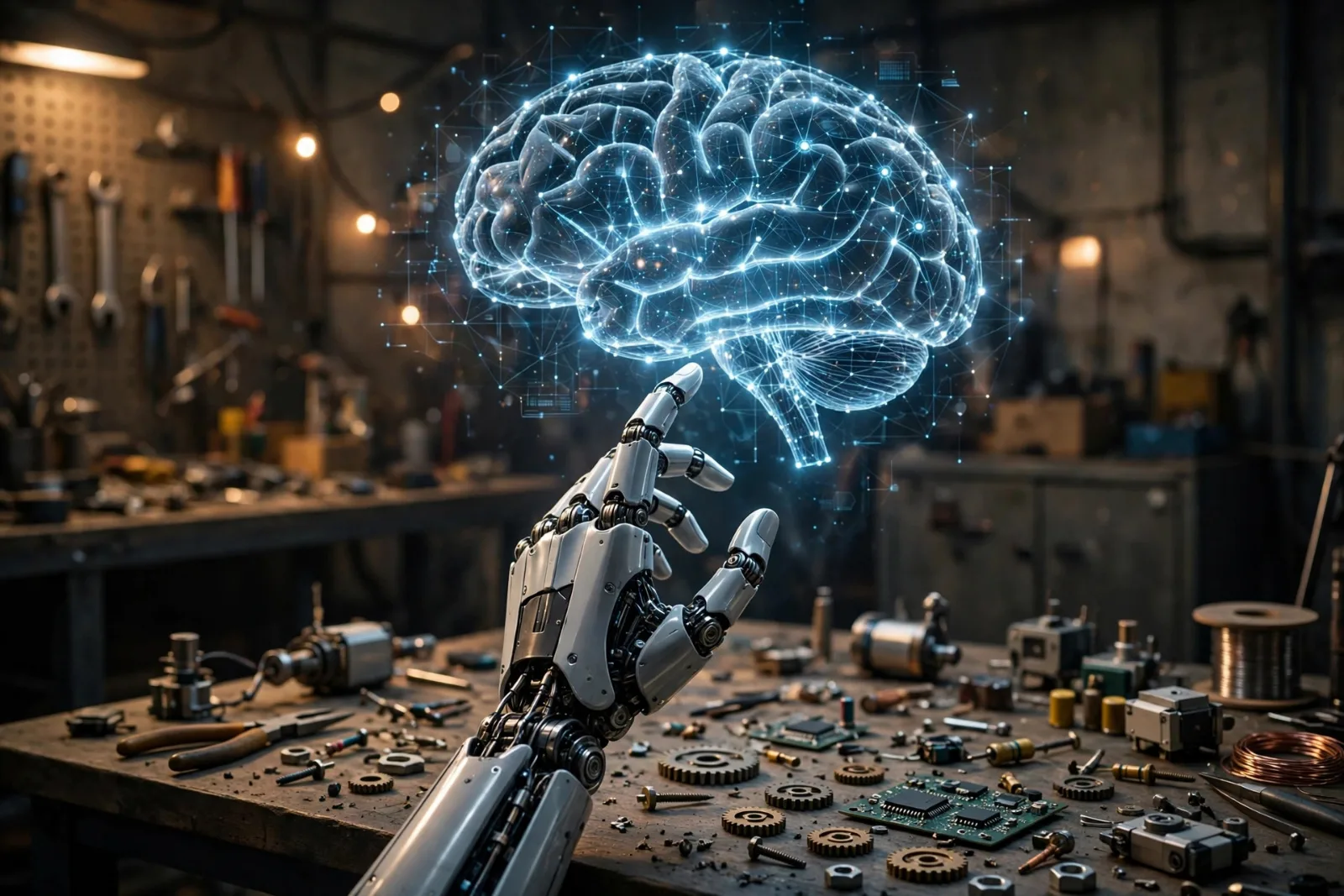
A robot that folds laundry in one home and then walks into a different home and does it again, without any retraining — that is the promise AGIBOT just made with GO-3 Preview, an embodied AI foundation model unveiled at the company's Innovation Day in Shanghai on 29 October 2026. It is not a chatbot you can download. It is a robot brain — a model that understands instructions, predicts what will happen next, and moves arms and wheels to make it happen. And AGIBOT says it has already learned from an enormous amount of real robot work, including roughly 2,000 real robots doing real tasks across 217 settings. The company claims GO-3 Preview ranks first on three embodied AI benchmarks — RoboDojo, RoboTwin and RoboColiseum — while also demonstrating one-shot learning and cross-robot transfer, where a skill learned by one machine shows up in another. But like most preview launches, the boldest claims are the hardest to check without the model itself. So this article explains what GO-3 is, what WRAM means, what the demos actually showed, and what is still unproven.
This matters because most robots today are brilliant at one rehearsed task and helpless at anything new. Change the lighting, move a cup by a few centimetres, or swap in a different arm, and the robot stalls. GO-3's promise is the opposite: a generalist robot brain that can adapt to new tasks, new objects and even new bodies, in homes, factories and logistics hubs.
What is an "embodied" AI model?
A chatbot lives in text. An embodied AI model lives in a body: it takes in what cameras and sensors see, decides what to do, and moves arms, grippers or wheels in the physical world. That loop — see, think, act — is the hard part. A chatbot that makes a mistake produces a wrong sentence. A robot that makes a mistake drops a glass or dents a car door.
That is why robot progress has lagged behind chatbot progress. Chatbots train on trillions of words scraped from the internet. Robots train on far scarcer data: physical demonstrations, which are slow, expensive and messy to collect. Every robot, task and environment is a little different, so the data does not transfer easily.
GO-3 is AGIBOT's answer to that bottleneck. It is a foundation model for robots: a large, general model trained on a wide range of robot data, which can then be adapted to specific tasks with much less extra training. It is the same idea as a language model that learns general language first and then specialises — except here, the "language" is movement, vision and touch. Think of it like the difference between hiring a specialist who knows one factory line perfectly and hiring someone who already understands factories in general.
For how machines like this find their way, see how self-driving cars work.
WRAM: the three-part brain
GO-3 is built on an architecture AGIBOT calls WRAM, short for World Reasoning Action Model. The name is a useful map of what the model does:
- Task understanding — working out what the instruction actually means. "Tidy the table" is not one action; it is a sequence: find the cups, pick them up, decide where they go.
- Future-state prediction — imagining what will happen next before acting. If the robot pushes this box, will it tip over? If it lifts that bag, will it tear?
- Action generation — turning the plan into precise motor commands: how far to reach, how hard to grip, when to stop.
WRAM ties these together with three core designs AGIBOT names CoAE, SVP and KASO, which respectively help the model handle diverse robot bodies, represent and predict the world, and plan actions for different situations. The company presents these as the reason GO-3 can move a skill from one robot to another without starting from scratch.
The other half of the design is learning across the full lifecycle: pre-training (learning general skills from vast data), post-training (refining for specific tasks), and deployment (learning on the job — improving from real-world operations). That last step is the headline claim: robots that keep getting better by working, not just by training. AGIBOT says this is how its systems have already shown steady improvements in real environments, though the company has not published a full independent audit of those gains. If it works as claimed, a robot could become genuinely more capable over time, instead of slowly degrading — which would change the economics of robotics completely.
The benchmark claims — and how to read them
AGIBOT says GO-3 Preview ranks first on three embodied AI benchmarks: RoboDojo, RoboTwin and RoboColiseum. That is a strong claim, but benchmarks have a well-known problem: they test specific, controlled scenarios, and a model can be tuned to score well on them without being better in the messy real world.
What are these? They are standardised test suites for robot manipulation and task execution — sets of tasks that different models can be compared on fairly. But they are still proxies: the best benchmark score does not guarantee the best robot in your kitchen.
Two honest caveats belong here. First, these are company-reported results from AGIBOT's own event, not independent verification. Second, first place on a benchmark is a snapshot: other labs may publish different results tomorrow. Treat the rankings as evidence the model is competitive, not proof it is the best.
That said, AGIBOT also showed real-world demonstrations. The company says robots running GO-3 can perform tasks after seeing a single demonstration, and skills transfer between robots without retraining. That cross-body transfer — if it holds — is arguably the most important claim: a robot that learns a skill from a wheeled arm and applies it to a humanoid, or vice versa, would cut training costs enormously. It is the kind of result that, if verified independently, would be a genuine step forward.
The learning demos that caught attention
Two demonstrations stand out because they show learning happening, not just performance:
- In a tabletop curling task, a robot beat the average performance of tested humans after four hours of learning on the job — picking up the skill from scratch in an afternoon.
- In another reported case, a system's effectiveness rose from 28.2% to 85.7% over five days of operation, again by learning while doing.
If those numbers hold up outside the demo room, they point to the real prize: robots whose value grows over time rather than wearing out. Instead of buying a robot that does one job forever, you buy a robot that gets better at new jobs as it goes.
AGIBOT is not a newcomer making its first claim. In September 2026 the company announced its 20,000th humanoid robot — a milestone that suggests the company has serious manufacturing capacity behind its AI claims. That scale matters: it gives AGIBOT the robots to generate training data, and the production lines to deploy improvements at scale.
What GO-3 is not — yet
It is important to keep the excitement honest:
- It is a Preview. The name says it. The full model is promised as open source by the end of 2026, and until that release, independent researchers cannot test it themselves.
- It is not a general-purpose humanoid you can buy. GO-3 is a model for robots in controlled industrial and logistics settings first. A home robot that folds your laundry is still years away.
- Safety and reliability questions remain. A robot that learns on the job also needs to learn what not to do. AGIBOT has not yet publicly detailed how it handles safety constraints when a model updates its own behaviour.
None of that diminishes the achievement. The field has waited years for a robot foundation model that generalises, learns continuously and proves it on multiple benchmarks at once. GO-3 looks like a serious candidate — and open-sourcing it would let the whole field check the claims.
Why this launch matters beyond AGIBOT
Robotics is becoming a contest between two philosophies. One builds brilliant specialists: a robot that does one warehouse job perfectly. The other, which GO-3 represents, builds generalists: a robot brain that can be pointed at new jobs. If the generalist approach wins, robots get cheaper to deploy, because the expensive part — teaching each new task — shrinks.
It also matters for who leads. AGIBOT is Chinese, and its progress underlines that the embodied AI race is not a one-country story. Open-sourcing GO-3 by the end of 2026, if it happens, would accelerate labs and startups worldwide, including competitors.
For readers, the practical takeaway is simpler. The robots moving beyond the factory floor — a shift we covered in our guide to how robots are leaving factories — are getting brains that understand language, predict consequences and learn from practice. GO-3 is one of the clearest demonstrations yet of that combination. The next test is not another benchmark. It is a robot, running GO-3, doing useful work in a place nobody rehearsed — day after day, without a team of engineers standing behind it.
For more on this, see our explainer on Cybertruck.
Takeaway checklist
- GO-3 Preview is AGIBOT's embodied AI foundation model, unveiled 29 October 2026 at Innovation Day in Shanghai.
- Its WRAM architecture unifies task understanding, future-state prediction and action generation.
- AGIBOT reports first place on RoboDojo, RoboTwin and RoboColiseum — company-reported results awaiting independent verification.
- Demonstrations include cross-robot transfer, Lego assembly, and learning that improved a curling task past average human performance in four hours.
- The full model is promised as open source by the end of 2026; that release is the moment the claims can be properly checked.
- The honest limit: benchmarks are not real homes and factories, and GO-3 is a preview, not a finished consumer product.
- Still curious how robot brains differ from chatbots? Read our plain-English guide to large language models.