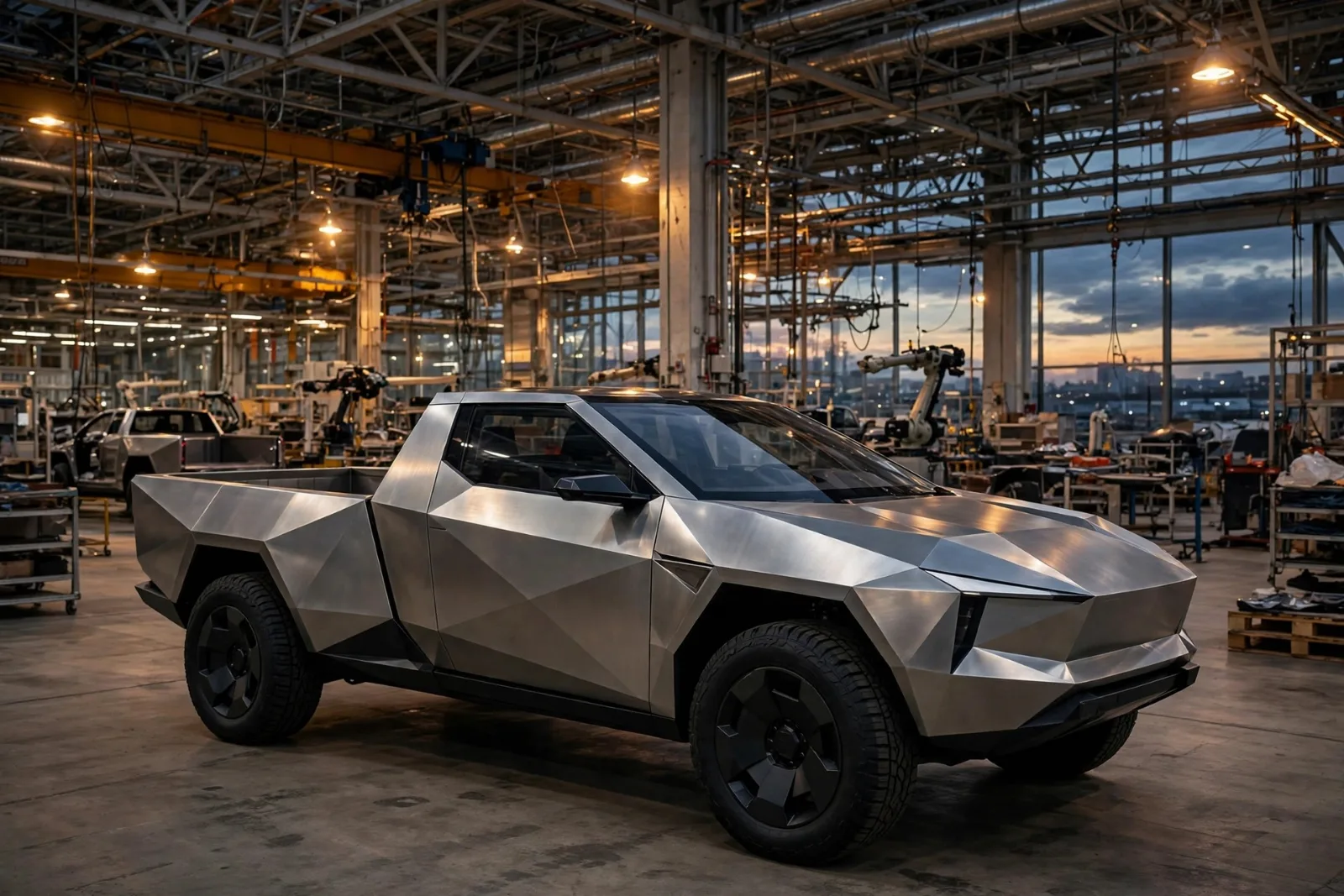
On 6 November 2026, Elon Musk posted on X that Tesla will wind down production of the Cybertruck at its Gigafactory Texas plant around the middle of 2027. The factory space will go to the Cybercab, Tesla's steering-wheel-free robotaxi. Less than four years after the first deliveries, the most talked-about pickup truck of the decade is on its way out — and the reason is not a recall or a scandal. It is a cold business calculation: the Cybertruck never sold in the numbers Tesla planned, while the robotaxi is now the company's main bet.
What exactly did Tesla announce?
Musk's post was short and specific: "Tesla will be winding down production of the Cybertruck at Gigafactory Texas around the middle of next year to make room for increased Cybercab production." A few points matter here:
- "Winding down" is not quite "discontinued." Musk did not say whether Cybertruck production will stop entirely or move to another factory. What is clear is that the Texas line — the only plant with the specialised equipment to build the truck's stainless-steel body — will stop making it.
- Ordering is already shrinking. Around the same time as the announcement, Tesla stopped taking orders for the entry-level Dual-Motor All-Wheel Drive version. Only the Premium and Cyberbeast trims remain on the website.
- Existing owners are covered. Cybertruck lead engineer Wes Morrill posted that Tesla will keep supplying spare parts and service for trucks already on the road. "Cybertruck was an incredible technology development platform and lives on through Cybercab," he wrote.
Why is the Cybertruck ending? The numbers tell the story
The Cybertruck was designed to be a mass-market American pickup. Tesla sized its Texas production line for 250,000 trucks a year. The reality was very different:
| Year | Cybertrucks sold in the US |
|---|---|
| 2024 | 38,965 |
| 2025 | 20,237 |
| 2026 (Jan–Sep) | 11,586 |
Sales figures are from Kelley Blue Book (2024–2025) and Cox Automotive (2026). Independent estimates put the current production rate at roughly 30,000 trucks a year — about an eighth of what the line was built for.
The truck launched in late 2023 at $60,990, with a stainless-steel exoskeleton, bullet-resistant panels and steer-by-wire steering — genuine engineering firsts. But the polarising wedge design, a high price for a working pickup, and a string of early quality problems kept it a niche product. A factory that big cannot survive on niche volumes, and every square metre it occupies is space the Cybercab cannot use.
What is the Cybercab, and why does Tesla want the space?
The Cybercab is a two-seat robotaxi with no steering wheel, no pedals and no mirrors. It was unveiled at Tesla's "We, Robot" event in October 2024, and it is the centrepiece of the company's plan to stop selling cars to drivers and start selling rides to passengers.
- The first production Cybercab rolled off the Texas line in February 2026, with volume production starting in April 2026.
- Paid public rides began in Austin in September 2026, when the Cybercab joined Tesla's unsupervised Robotaxi fleet.
- Tesla's Q3 2026 investor materials set an annual Cybercab production target of more than 125,000 units — and Musk has said the company will soon build more Cybercabs than all its other vehicles combined.
Gigafactory Texas has more than 10 million square feet of floor space, so room is not obviously scarce. But the Cybertruck line runs at a fraction of its installed capacity while occupying a large, specialised section of the plant. Reallocating that space is the fastest way to scale Cybercab output without building a new factory.
For more on this, see our explainer on drones.
Cybertruck vs Cybercab
| Cybertruck | Cybercab | |
|---|---|---|
| Seats | 5 | 2 |
| Steering wheel | Yes (steer-by-wire) | None |
| Who drives | You | Nobody — fully autonomous |
| Purpose | Pickup truck | Robotaxi |
| Status | Winding down mid-2027 | Ramping up fast |
What happens to existing Cybertruck owners?
If you own one, the announcement changes little in the short term. Tesla says parts and service will continue, and the company has a long record of sending software updates to older cars for years. Two things are worth watching:
- Resale values. Used prices usually fall when a model ends production, because buyers worry about long-term support. Limited-run vehicles sometimes buck that trend, but do not count on it.
- Buying window. Anyone who still wants a new Cybertruck has roughly until the middle of 2027. After that, only the used market remains — unless Tesla surprises everyone and moves production elsewhere, which it has not announced.
What this says about Tesla's future
The Cybertruck's exit is really a statement about where Tesla thinks the money is. Selling a $60,000-plus pickup to a small audience was never going to fund the company's ambitions. A robotaxi fleet, if it works at scale, earns money every mile, every day, from a vehicle that never sleeps.
That is still a big "if". Robotaxis must prove they are safe, win over regulators city by city, and survive the economics of running a fleet — cleaning, charging, maintenance and insurance at a scale no carmaker has attempted. The Cybertruck's short life is a reminder that Tesla's boldest products do not always find a market. The Cybercab is now the biggest bet in the company's history, and the factory floor it is taking over is the proof.
For more on this, see our explainer on AGIBOT.
Takeaway checklist
- Cybertruck production winds down around mid-2027 at Gigafactory Texas, to free space for the Cybercab robotaxi.
- Sales never matched the plan: 38,965 in 2024, 20,237 in 2025, and 11,586 in the first nine months of 2026 — against a line built for 250,000 a year.
- Musk has not confirmed a full discontinuation — production could theoretically move, but no other plant is equipped to build it.
- Existing owners keep parts and service, according to Cybertruck lead engineer Wes Morrill.
- The Cybercab is the priority now: two seats, no steering wheel, paid rides in Austin since September 2026, and a production target above 125,000 a year.
Internal links: How Self-Driving Cars Actually Work · Solid-State Batteries Explained