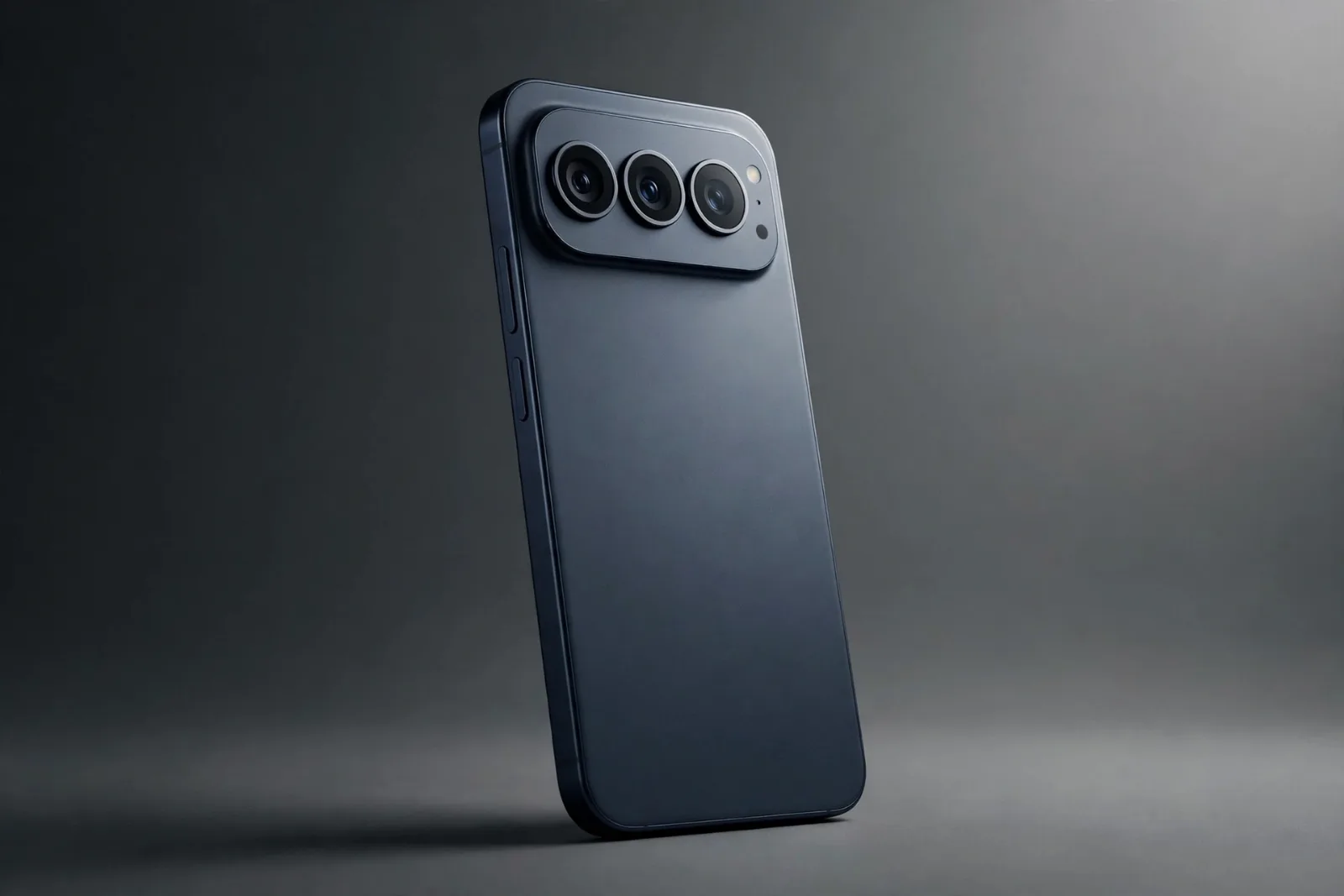
Apple has refreshed two of its most familiar Macs with its newest chip — and deliberately left the bigger news for another day. On Tuesday 27 October 2026, the company unveiled a 14-inch MacBook Pro and a 24-inch iMac powered by the M6 chip, both keeping the designs of the models they replace. Pre-orders open on Wednesday 28 October in 35 countries and regions, including the United States, with availability from Friday 6 November 2026.
The timing matters. The launches land a day before Apple's "Pro and Tell" event in Los Angeles on 28 October, which Bloomberg News has reported is expected to feature Apple's first touchscreen MacBook Pro. Nothing about a touchscreen or a redesigned laptop was announced with these two machines — so anyone hoping for a radical new MacBook should wait for that event before buying.
Here is what actually changed, what stayed the same, and who these machines are for.
What Apple announced
Two machines, one chip family, no redesigns. Both run macOS 27, which brings a new version of Apple's assistant, Siri AI, and Apple Intelligence features designed to run large language models directly on the device rather than in the cloud. That on-device angle is the thread running through the whole announcement: Apple is pitching these Macs as AI computers first, and faster laptops second.
The M6 chip itself first appeared in the Mac mini in August 2026, so this is an expansion of an existing chip line rather than a brand-new architecture reveal. The performance figures below are Apple's own claims; independent testing had not yet appeared at the time of writing, so treat the biggest multiples with the usual caution.
The 14-inch MacBook Pro: a chip upgrade, not a new laptop
The new 14-inch MacBook Pro starts at $1,999 ($1,899 with education pricing). Its M6 chip has a 12-core CPU and a 12-core GPU — two more cores of each than the base M5 chip it replaces. Apple says graphics are up to 30% faster than the M5 model and on-device AI work, such as processing a large language model prompt, is up to 25% faster.
Battery life is the other headline claim: up to 24 hours, which Apple calls the longest ever in a Mac. Real-world battery life always depends on what you are doing — video playback figures and heavy AI workloads tell very different stories — but if the claim holds up in testing, it is a genuine step forward for a pro laptop.
Everything else is familiar, and that is the point. The laptop keeps its Liquid Retina XDR display (up to 1,600 nits in HDR, with an optional nano-texture finish), three Thunderbolt 4 ports, HDMI, an SDXC card slot, MagSafe 3 charging and a headphone jack. It comes in space black or silver, with memory starting at 16GB and configurable up to 32GB. Connectivity moves to Wi-Fi 7 and Bluetooth 6.
In short, if you liked the previous 14-inch MacBook Pro, this is the same machine with a faster engine and a longer-lasting battery. If you were waiting for a new design, this is not it.
The iMac: the bigger jump
The iMac gets the more meaningful upgrade, because it skipped a generation: the previous model ran the M4 chip from 2024, so this is a two-step jump rather than one.
The 24-inch iMac starts at $1,499 ($1,449 with education pricing) for a model with a 10-core CPU and 10-core GPU, two Thunderbolt 4 ports, and support for one external display at up to 6K resolution. A $1,699 model ($1,599 education) gets the full 12-core chip, four Thunderbolt 4 ports, and support for two external 6K displays alongside its built-in screen. Both starting configurations include 16GB of memory and a 256GB SSD — worth knowing, because a large photo or video library will want a larger SSD or external storage.
Apple claims up to 5 times faster on-device AI performance than the M4 iMac, up to twice as fast graphics in its comparisons, and SSDs up to twice as fast, plus optional 2.5 Gigabit Ethernet for wired connections. The familiar parts carry over unchanged: the 24-inch 4.5K display (4,480 by 2,520 resolution, 500 nits), the 12MP Center Stage camera, the six-speaker system, and the seven colours — blue, green, pink, yellow, purple, orange and silver. A Magic Keyboard and Magic Mouse are included; the higher-tier model includes a Magic Keyboard with Touch ID.
MacBook Pro vs iMac at a glance
| 14-inch MacBook Pro (M6) | 24-inch iMac (M6) | |
|---|---|---|
| Starting price (US) | $1,999 | $1,499 (10-core) / $1,699 (12-core) |
| Chip | 12-core CPU, 12-core GPU | 10-core or 12-core CPU/GPU |
| Memory from | 16GB (up to 32GB) | 16GB (up to 24GB on 10-core, 32GB on 12-core) |
| Display | 14.2-inch Liquid Retina XDR, up to 1,600 nits HDR | 24-inch 4.5K, 500 nits |
| Portability | A laptop — it leaves the desk | An all-in-one — it stays on the desk |
| Best for | Work anywhere, heavy workloads on the move | A family or studio desk setup with a big built-in screen |
What did not change — and what to watch next
Prices match the outgoing models' current prices, which themselves include increases Apple made in June 2026. In other words, nobody is getting a cheaper Mac out of this refresh — just a faster one for the same money.
The more important "what's next" is the event itself. Apple's 28 October "Pro and Tell" event is a hands-on, in-person showcase in Los Angeles, and reports have consistently pointed to a redesigned MacBook Pro with an OLED touchscreen as its headline. That would be a far bigger change than anything in these two refreshes: Apple has never shipped a touchscreen Mac. Until Apple confirms it on stage, though, it remains a report — not a fact to base a purchase on. The sensible move for anyone who can wait a day is to see what the event brings before ordering.
Who should buy — and who should wait
Buy the M6 MacBook Pro if you need a portable pro laptop now, you are coming from an Intel Mac or an early Apple Silicon model, and on-device AI features matter to your work. The battery claim alone could be decisive for travellers.
Buy the M6 iMac if you want a complete desk computer — screen, speakers, camera, keyboard and mouse in one box — and your current all-in-one is several years old. The jump from M4 is substantial.
Wait if you already own an M-series Mac from the last couple of generations, or if a redesigned laptop might tempt you. The designs, ports and everyday experience here are unchanged, and the event on 28 October could change the decision entirely.
For a plain-English grounding in what a chip's cores actually do, see our guide to how CPUs actually work — and for where Apple's silicon strategy fits into the wider AI chip race, see Microsoft's Maia 300 AI chip, explained.
Takeaway checklist
- Apple announced the M6 14-inch MacBook Pro and 24-inch iMac on 27 October 2026 — same designs, new chips.
- Pre-orders open 28 October 2026; both machines are available from 6 November 2026.
- Prices: MacBook Pro from $1,999; iMac from $1,499 (10-core) or $1,699 (12-core).
- Headline claims: up to 30% faster graphics and 25% faster AI than M5 on the laptop; up to 5x faster on-device AI than M4 on the iMac; up to 24 hours of battery on the laptop.
- All performance figures are Apple's own — wait for independent tests before treating them as fact.
- The touchscreen MacBook Pro is still only a report ahead of the 28 October event. If you can, wait a day before buying.