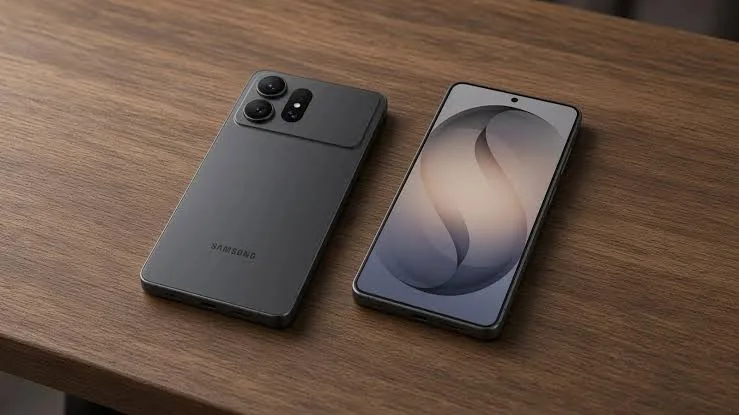
Samsung hasn't announced the Galaxy S27 Ultra, and almost certainly won't for months. Yet the phone is already one of the most searched-for gadgets on the internet — it appeared on Google's daily search trends in Pakistan this week — because the leaks are unusually detailed this time. Renders, chip rumours, camera specs and even colours have all surfaced months ahead of the expected launch.
This article collects what the most reliable sources say, and just as importantly, flags what is still speculation. Until Samsung holds its unpacked event — expected in January or February 2027, the months Samsung has used for Galaxy S launches for years — everything here is a rumour, not a fact.
The new design: goodbye camera rings
The most striking claim comes from CAD-based renders reported by Android Headlines in October 2026: Samsung is dropping the floating camera rings it has used since the Galaxy S22 series and replacing them with a single large rectangular camera plateau (sometimes called a camera island) on the back of the phone.
The phone itself is barely changing in size — reportedly about 163.7 x 78.2 x 8 mm with a 6.9-inch display, a fraction larger than its predecessor. The big visual difference is that raised rectangle. Notebookcheck, reporting the same renders, notes the phone measures roughly 12.5 mm thick once you include the camera bump. The S Pen — the stylus that has defined every Ultra since Samsung folded the Note line into the S series — still has a slot in the case, according to the renders.
Early images also suggest a slightly warmer overall colour tone for photos, plus improved highlight control and cleaner dark areas, according to veteran leaker Ice Universe, though software processing claims like these are among the hardest to verify before launch.
The camera overhaul: simpler, but stronger
Samsung appears to be simplifying the camera system while upgrading the hardware inside it. Leakers agree the S27 Ultra drops from four rear cameras to three:
- 200MP main camera — a new sensor, reportedly called the ISOCELL HP6
- 50MP ultrawide camera — a significant upgrade from the 12MP sensor on older Ultras
- 50MP 5x periscope telephoto — carried over or refreshed from the current model
The casualty is the 10MP 3x telephoto camera, which Samsung is reportedly axing. That sensor was widely considered the weakest link in the Ultra's camera lineup, and Samsung appears to be betting that a new 200MP main sensor can handle 3x-to-5x zoom duties through cropping instead.
The selfie camera may also get a bump, from 12MP to 16MP, according to leak round-ups. And in a separate leak reported by Sportskeeda, both the S27 Pro and Ultra are said to use flat LTPO OLED displays with a 120Hz refresh rate, an anti-reflective coating, and a privacy display feature that narrows the viewing angle so neighbours can't read your screen.
A more speculative rumour mentions Polar ID, a new face-recognition system said to work like Apple's Face ID but without a large notch or cutout. Treat this one as unconfirmed.
The chip drama: Snapdragon vs Exynos, again
This is the strangest and most interesting part of the S27 Ultra story, and it has flip-flopped in the space of weeks.
In early September 2026, GSMArena reported — citing Korean publication MoneyToday — that Samsung had built an Exynos 2700 motherboard for the S27 Ultra, suggesting the Ultra might ship with Samsung's own chip in some regions. The Exynos 2700 is manufactured on Samsung's second-generation 2nm process (called SF2P), which Samsung claims delivers roughly 12% better performance, 25% lower power use and an 8% smaller chip area than the previous generation.
Then, in October 2026, insider tips swung back the other way: the S27 Ultra will reportedly use Qualcomm's Snapdragon 8 Elite Extreme Gen 6 in every market, with no Exynos version at all. Android Headlines reported the same outcome, noting the Exynos 2700 will instead power the S27, S27+ and S27 Pro in Europe, Korea and other regions, while the US and China stick with Snapdragon.
If that holds, the S27 Ultra would continue the recent pattern: Samsung has reserved the Snapdragon chip for its top Ultra model in most years since the Galaxy S22 Ultra was the last Ultra with an Exynos variant back in 2022.
For context on what a "2nm chip" actually means and why shrinking transistors matters, see our guide to how modern processors are made.
Battery, charging and colours
The leaks agree on a meaningful battery upgrade: 5,700mAh, the first real capacity increase on an Ultra in years. One leak round-up also mentions 60W wired charging — faster than Samsung's long-standing 45W cap — though this is less certain.
The reported colour options are Black, Blue, Light Pink, Violet and White. Storage and memory are expected to mirror the current model: 12 or 16GB of RAM with 256GB, 512GB or 1TB of storage.
Rumour vs reality: a quick scorecard
| Claim | Confidence |
|---|---|
| New rectangular camera plateau design | High — multiple CAD renders agree |
| Triple camera (200MP + 50MP + 50MP), 10MP 3x dropped | High — consistent across leakers |
| Snapdragon chip in all Ultra markets | Medium-high — latest insider tips, but it flip-flopped once already |
| 5,700mAh battery | Medium — widely reported, not yet confirmed |
| 60W charging, Polar ID face unlock, 16MP selfie camera | Low — single-source rumours |
| Price and launch date | Unknown — expect January or February 2027 |
Note how this works: the supply chain (cases, screens, camera parts) leaks early and reliably, while decisions made in meeting rooms — final chip choice, pricing — can change until late. That is why the design rumours are the most trustworthy and the price rumours the least.
When is it coming, and what will it cost?
Every report points to Q1 2027 — almost certainly January or February, Samsung's traditional window. Pricing is the one topic almost nobody is willing to predict, though Notebookcheck notes that "price increases are also likely," which would hardly be surprising given the bigger battery, new sensors and the rising cost of flagship chips.
For reference, the current Galaxy S26 Ultra launched at $1,299, and Samsung has held that starting price for several generations. A meaningful jump would be a first for the Ultra line.
Your takeaway checklist
- Treat everything as a rumour until Samsung announces the phone — even the confident-sounding leaks.
- The design change is the safest bet: a rectangular camera plateau replacing the floating rings.
- Expect a simpler camera lineup — three sensors, with the old 10MP 3x zoom gone.
- The chip question is the one to watch: latest reports say Snapdragon worldwide for the Ultra, Exynos 2700 for the rest of the S27 range in most regions.
- The real news is the battery: 5,700mAh would be the first genuine capacity jump in years.
- If you're buying now, the current S26 Ultra's price will drop when the S27 Ultra launches — the worst time to pay full price for a flagship is the three months before its replacement.
Have you followed flagship phone launches before? The pattern repeats every year — and if you enjoyed this breakdown of how they leak and launch, our explainer on last year's biggest Android flagship shows how the same rumour cycle plays out in laptops.
Flagship phones like this are built to take full advantage of how 5G changes connectivity.