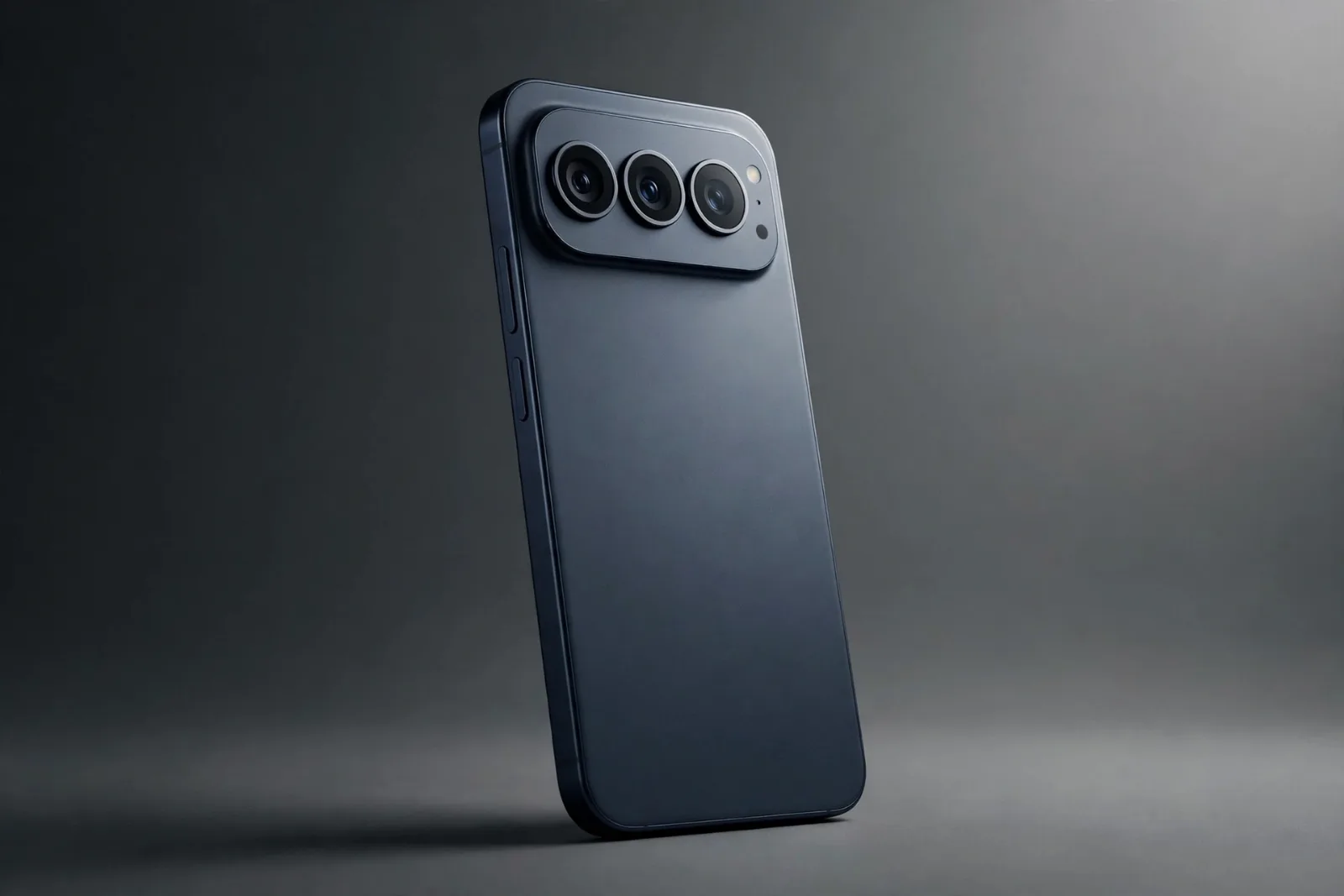
Foldable phones were supposed to be a niche experiment. Samsung spent years proving otherwise, and then did something surprising: it launched the Galaxy Z TriFold, a triple-folding phone with a near-10-inch screen that unfolded into a tablet, sold it for $2,899, and then discontinued it in South Korea just three months after launch. The obvious reading would be that tri-folds are dead. The rumours say the opposite — Samsung is planning its biggest foldable lineup ever for 2027, with a refined Galaxy Z TriFold 2 and a brand-new rollable Galaxy Z Slide.
None of this is confirmed by Samsung, so treat every spec here as a reported rumour. But the pattern is real: Samsung killed a $2,899 device in months and is now doubling down on the most expensive phone category in the industry. Here is what is being reported, and what it means.
The original Galaxy Z TriFold: a $2,899 experiment
The original TriFold launched in December 2025 and reached the US in January 2026 at $2,899. Samsung reportedly built only 30,000 units, which sold out in weeks. That sounds like a success — until you look at the details: several reports say Samsung was effectively selling the device at a loss because of the manufacturing complexity, and it was discontinued in South Korea in March 2026, roughly three months after launch.
Why launch something so extreme and then kill it? The consensus reading is that the TriFold was a flagship demonstrator — proof that Samsung could engineer a working triple-folding phone — rather than a product meant to sell at scale. The real prize is what comes next: a version cheap enough and thin enough for normal buyers.
The Galaxy Z TriFold 2: what is being reported
Multiple reports, starting with supply-chain briefings picked up by tipster Yeux1122, say Samsung has approved a new, refined hinge for the second-generation TriFold — described as "lightweight and ultra-thin." The design goals are clear: make it thinner, lighter, and more durable than the original.
The numbers being reported tell the story:
- The original measured roughly 12.9mm folded — chunky even by foldable standards.
- Rumours say the sequel could be only slightly thicker than the Galaxy Z Fold 7's 8.9mm folded (some reports say around 9mm). If true, a triple-fold phone would be about as thick as today's two-fold phones — a genuine engineering leap.
- The main display is expected to stay at about 9.96 inches with a 6.49-inch cover screen.
On pricing, the rumours are ambitious: Samsung reportedly aims to keep the price "nearly identical" to the original — around $2,899 — despite rising component costs across the industry. Holding the price while thinning the device would be a strong signal that tri-folds are moving from experiment to mainstream-ish product.
The expected launch window is mid-2027, possibly July 2027, with TriFold 2 kicking off the year's foldable announcements. Development is still early, so specifications are not locked in.
The Galaxy Z Slide: Samsung's rollable answer
The Galaxy Z Slide is reportedly a separate device with a sliding, rollable display that extends out of the chassis instead of folding in half. The key advantage: no visible crease, the single biggest complaint about every folding phone ever made.
The name is not new. Samsung registered a "Z Slide" trademark back in 2021, which suggests the concept has been in the lab for years. Samsung Display has already shown the underlying technology — the Slidable Flex Vertical concept demonstrated at CES 2025, which expanded from 5.1 inches to 6.7 inches vertically — so the rollable mechanics exist in prototype form.
The timeline is fuzzy: reports place the Z Slide in late 2027 or early 2028. It would be the most radical form factor Samsung has shipped since the original Galaxy Fold in 2019.
The six-model 2027 lineup rumour
The spike in attention this week traces to a post on October 14, 2026 by tipster @TheGalox_ on X, claiming Samsung's six-model 2027 Galaxy Z lineup — billed as the "biggest foldable lineup ever":
- Galaxy Z Slide
- Galaxy Z TriFold 2
- Galaxy Z Fold 9 Ultra
- Galaxy Z Fold 9 Pro (a new name)
- Galaxy Z Fold 9
- Galaxy Z Flip 9
The leak claims battery, thickness, and weight improvements across the board, with the TriFold 2 launching first. Coverage from GSMDome, Wirefly, 9to5Google, and others through October 17–19 keeps the story spiking.
One caution: not all reports agree. Korea's ETNews points to only four 2027 foldables (Fold 9, Fold 9 Ultra, Flip 9, and TriFold 2) — no Slide and no Fold 9 Pro. Some sources push the rollable Slide into 2028. The honest picture is that Samsung is planning a big 2027 foldable push, but the exact device list is still rumour-stage.
The Apple angle
Leaker Lanzuk reported on September 14, 2026 that Samsung is considering pulling the TriFold 2's launch forward in response to Apple's foldable iPhone Duo reveal, with the rollable device also moved up. Note that the iPhone Duo itself comes from the same report chain — it is a reported rumour about Apple, not a confirmed product — so this reads as Samsung contingency planning rather than fact. Still, it underlines the stakes: after five years of Samsung owning foldables alone, competition may finally be coming, and Samsung wants to be ahead of it.
How the three devices compare
| Galaxy Z TriFold (original, 2025) | Galaxy Z TriFold 2 (rumoured, 2027) | Galaxy Z Slide (rumoured, 2027–28) | |
|---|---|---|---|
| Price | $2,899 | ~$2,899 (reported target) | Unknown |
| Folded thickness | ~12.9mm | ~9mm (reported target) | Unknown |
| Main display | ~9.96 in | ~9.96 in (expected) | Expands via rolling |
| Crease | Visible | Visible (hinge improved) | Reportedly none |
| Production | 30,000 units, discontinued in 3 months | Mass-market ambition | Unknown |
| Launch window | Dec 2025 / Jan 2026 (US) | Mid-2027 (reported) | Late 2027–early 2028 (reported) |
The table tells the real story: the TriFold 2 rumour is about taking a $2,899 experiment and making it thinner and cheaper to build; the Z Slide is about eliminating the crease entirely.
The bigger picture: why this matters
Foldables have always fought two objections: they are too thick and too expensive. A tri-fold phone at ~9mm and roughly the original price would answer both at once, and a crease-free rollable would remove the third objection, the folding seam itself. If Samsung ships even half of this lineup in 2027, it would be the clearest sign yet that foldables are moving from enthusiast curiosity to a real product category — especially with Apple reportedly preparing its own entry.
The counterpoint is honest too: Samsung has promised more foldable variety before, and most of it arrived late or in tiny quantities. The original TriFold sold out 30,000 units, but it also died in three months. Rumours this early in development are routinely wrong about dates, names, and specs.
Takeaway checklist
- Do not treat rumoured specs as confirmed: the six-model lineup, the $2,899 target, and the ~9mm thickness all come from tipsters and supply-chain reports, not Samsung. Dates and names will shift.
- The tension is the story: Samsung killed a $2,899 phone in three months and is now planning its biggest foldable lineup ever — a tri-fold is only worth doing if it gets thinner and cheaper to make.
- Watch the hinge: the reported "lightweight and ultra-thin" hinge is the make-or-break engineering story. If Samsung can get a tri-fold down near 9mm folded, that technology flows into every other foldable.
- Watch the crease: the Z Slide's rollable display reportedly has no visible seam. If Samsung ships that, it resets what buyers expect from a folding screen.
- Thinking of buying now? Today's Galaxy Z Fold and Flip models will not suddenly become obsolete — none of the 2027 devices are confirmed, and rumoured flagships often slip. But if your upgrade window is mid-2027 or later, waiting to see what TriFold 2 looks like is reasonable.
For context on where Samsung's 2027 lineup begins, see our explainer on the Galaxy S27 Ultra — the four-model S27 range is the first half of the same reported "biggest lineup ever" strategy.