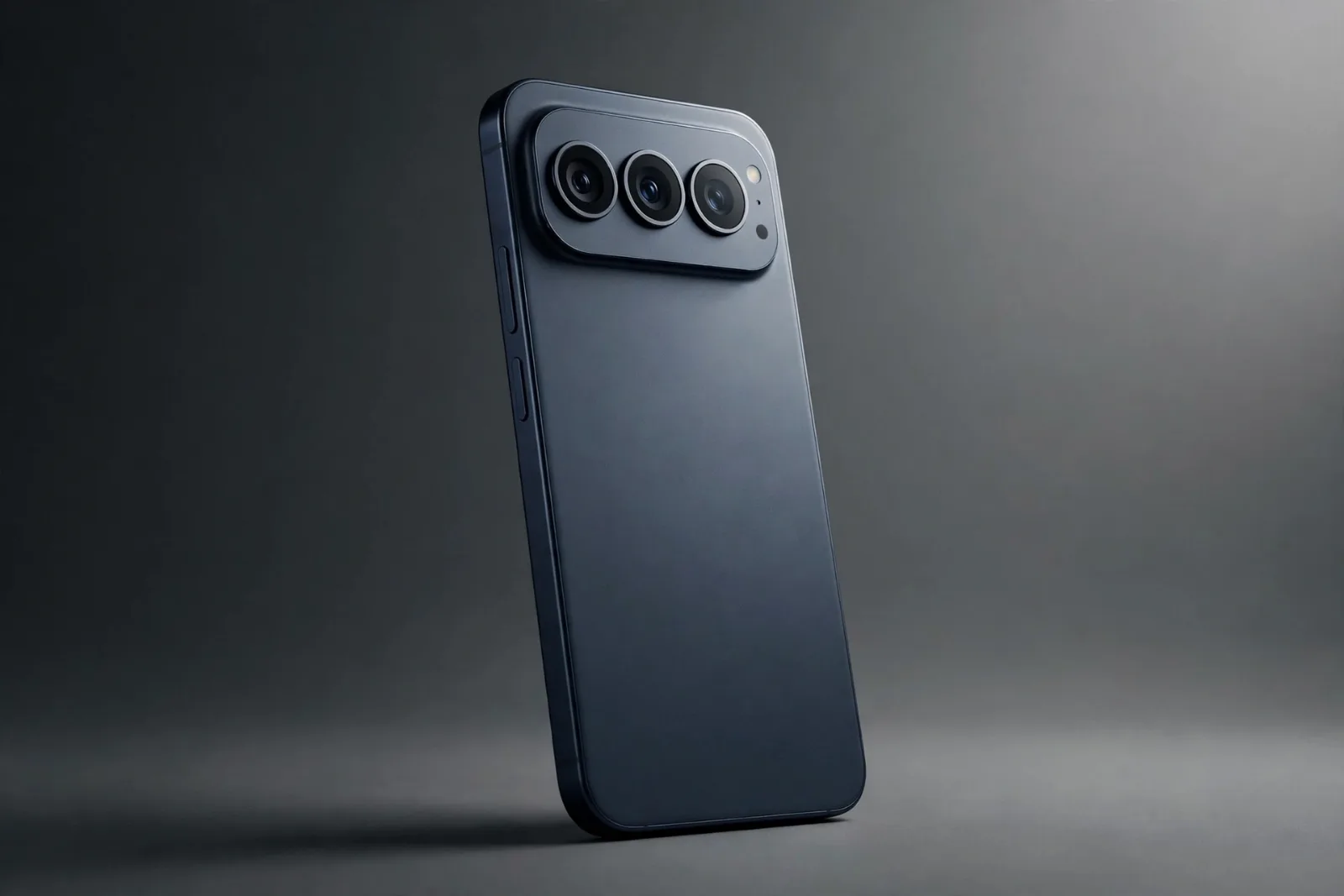
On Friday, October 23, 2026, Apple's first foldable iPhone went on sale in more than 70 countries. The iPhone Duo starts at $1,999, folds open like a book into the largest display Apple has ever put on an iPhone, and brings back a feature nobody expected: Touch ID. Here is what it is, what it costs, what's genuinely new — and the catches you should know before buying.
What exactly is the iPhone Duo?
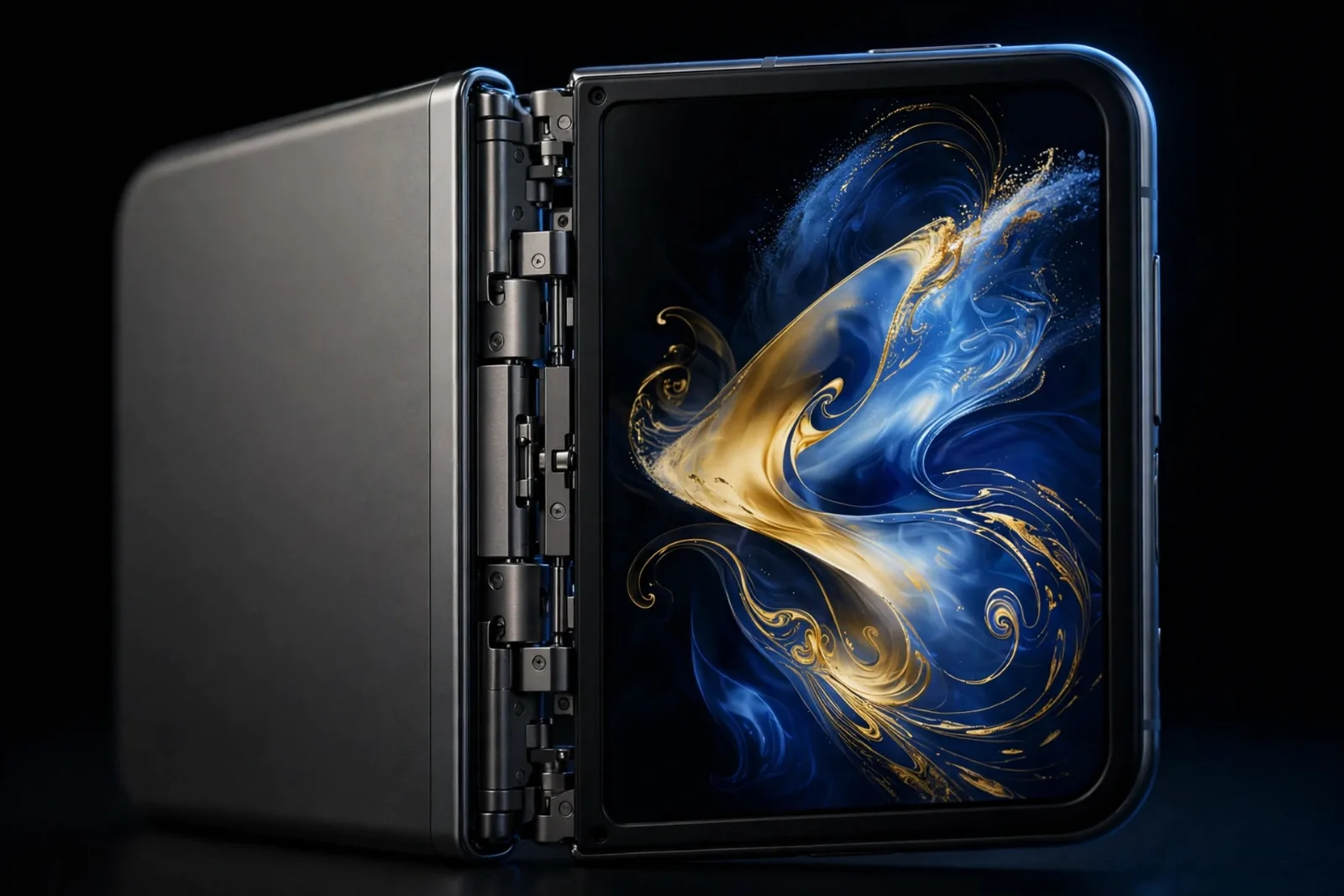
The Duo is a book-style foldable. Closed, it works like a compact smartphone: a 5.4-inch outer display for calls, texts, and quick glances — roughly the size and shape of a passport. Open it, and a 7.6-inch inner display unfolds, giving you a small tablet's worth of screen for reading, documents, split-screen multitasking, and video.
Apple says the inner panel is its largest-ever iPhone display: about 50 percent more screen area than the iPhone 18 Pro Max, while the outer display offers roughly 90 percent of the screen area of an iPhone 18 Pro. It comes in two colors, Star White and Night Sky, with a titanium frame and hinge cover.
The specs, at a glance
| Feature | Detail |
|---|---|
| Inner display | 7.6-inch OLED, nano-texture finish, ProMotion up to 120Hz |
| Outer display | 5.4-inch OLED, ProMotion up to 120Hz |
| Chip | A20 Pro with vapor-chamber cooling |
| Connectivity | Apple's C2 cellular modem (5G incl. mmWave), N1 chip (Wi-Fi 7, Bluetooth 6), USB-C up to 10 Gb/s |
| Rear cameras | Two 48MP (main + ultrawide, 2x optical zoom) — no telephoto |
| Front cameras | 12MP + under-display FaceTime camera; 4K 120fps Dolby Vision video |
| Security | Touch ID in the side button; unlock with Apple Watch also supported |
| SIM | eSIM only, worldwide — two active eSIMs, room for 8+ |
| Battery | Dual-battery system: 44 hours of video on the outer display, 31 hours on the inner |
| Charging | ~50% in 20 minutes with a 60W+ adapter; MagSafe and Qi2 up to 25W (no adapter in the box) |
| Durability | IP68 (dust and water, up to 6 metres for 30 minutes) |
| Size and weight | 5.2mm thin when open, 11.3mm folded, 254 grams |
| Price | $1,999 (256GB) · $2,199 (512GB) · $2,599 (1TB) · $3,199 (2TB) |
What's genuinely new — not just a hinge
Apple's biggest changes went beyond adding a fold:
- Touch ID returns. There is no Face ID on the Duo. Apple put a fingerprint sensor in the side button instead — the practical choice, since the phone may be closed, half-open, propped on a table, or flat at any given moment. A compatible Apple Watch can also unlock it.
- eSIM only, everywhere. The Duo is the first iPhone sold without a physical SIM tray in any market. Apple says the freed-up space went to battery capacity, and more than 500 carriers worldwide support eSIM — but if you travel with local physical SIMs or your carrier doesn't do eSIM, check before ordering. For how these tiny digital SIMs work, see our eSIM explainer.
- Nano-texture inner display. A matte coating on the folding screen cuts glare and makes the inevitable crease less visible. For a refresher on the underlying display tech, see our OLED displays explainer.
- Dual-battery design. Two separate batteries, one in each half, managed by software as one. That's how Apple claims 44-hour video playback from a phone this thin.
The software: iOS 27.1 thinks in folds
The Duo ships with iOS 27.1, built around the folding form. Standout features include Split View for running apps side by side, hands-free FaceTime (the half-folded phone is its own tripod), StandBy on either display without charging, and camera tricks that use the second screen — Duo Preview, Smart Take, and Kid Cue. Netflix, Zoom, and Slack have already adapted their apps for the larger canvas, and Apple Pencil (USB-C) support is scheduled later in 2026.
Price and availability: the real story
The Duo was announced on September 9, 2026 — the first major hardware launch under new Apple CEO John Ternus, who took over on September 1 after Tim Cook moved to executive chairman. Pre-orders opened October 16 at 5 a.m. PT, and within about 30 minutes every US configuration showed delivery estimates of January 25, 2027, according to MacRumors. Apple also capped online orders at two phones per customer in several markets.
Launch-day queues appeared in New York, London, Shanghai, and Hong Kong, though Apple limited walk-in stock at stores. The phone went on sale October 23 in 70+ countries including the US, UK, Japan, India, Singapore, and Australia, with 28 more markets following on October 30. Some early orders have since seen estimates improve toward November. In Pakistan, PTA-approved units arrived through Mercantile — tech journalist Akram Ali unboxed one on launch day.
Apple financing: about $83.29/month for 24 months, trade-in credit of $175–$885 for an iPhone 13 or newer, and Apple Card monthly installments at 0% APR with 3% Daily Cash.
The catches
- $1,999 is laptop money. This is the most expensive mainstream iPhone ever — double a standard flagship.
- No telephoto camera. You get two 48MP rear cameras with 2x optical-quality zoom, but no dedicated zoom lens.
- No Face ID. Touch ID is fine, but it's a step back for anyone used to face unlock.
- eSIM only. Worldwide, no exceptions. Great if your carrier supports eSIM; a dealbreaker if it doesn't.
- Availability is the real spec. January delivery estimates mean many buyers are paying full price to wait three months.
Apple vs Samsung: the foldable race is finally on
Samsung has owned the foldable category alone since the original Galaxy Fold in 2019, and it's reportedly planning its biggest foldable lineup ever for 2027 — including a cheaper tri-fold and a rollable phone. We covered those plans in detail in Samsung's 2027 Foldable Revolution. The Duo is Apple's answer: less experimental, more expensive, and betting that a mature hinge, eSIM simplicity, and iOS polish can turn a niche form factor mainstream.
Takeaway checklist
- Wait if you need a telephoto camera, rely on a physical SIM, or your carrier doesn't support eSIM.
- Don't panic-buy: January delivery estimates are improving toward November for some orders — and scalper prices aren't worth it.
- Check your carrier's eSIM support before ordering, especially if importing the phone from another country.
- Storage pick: 256GB at $1,999 is the sensible entry; 512GB ($2,199) is the sweet spot for 4K video shooters.
- Want the competition's side of the story? Read our Samsung 2027 foldable explainer first.