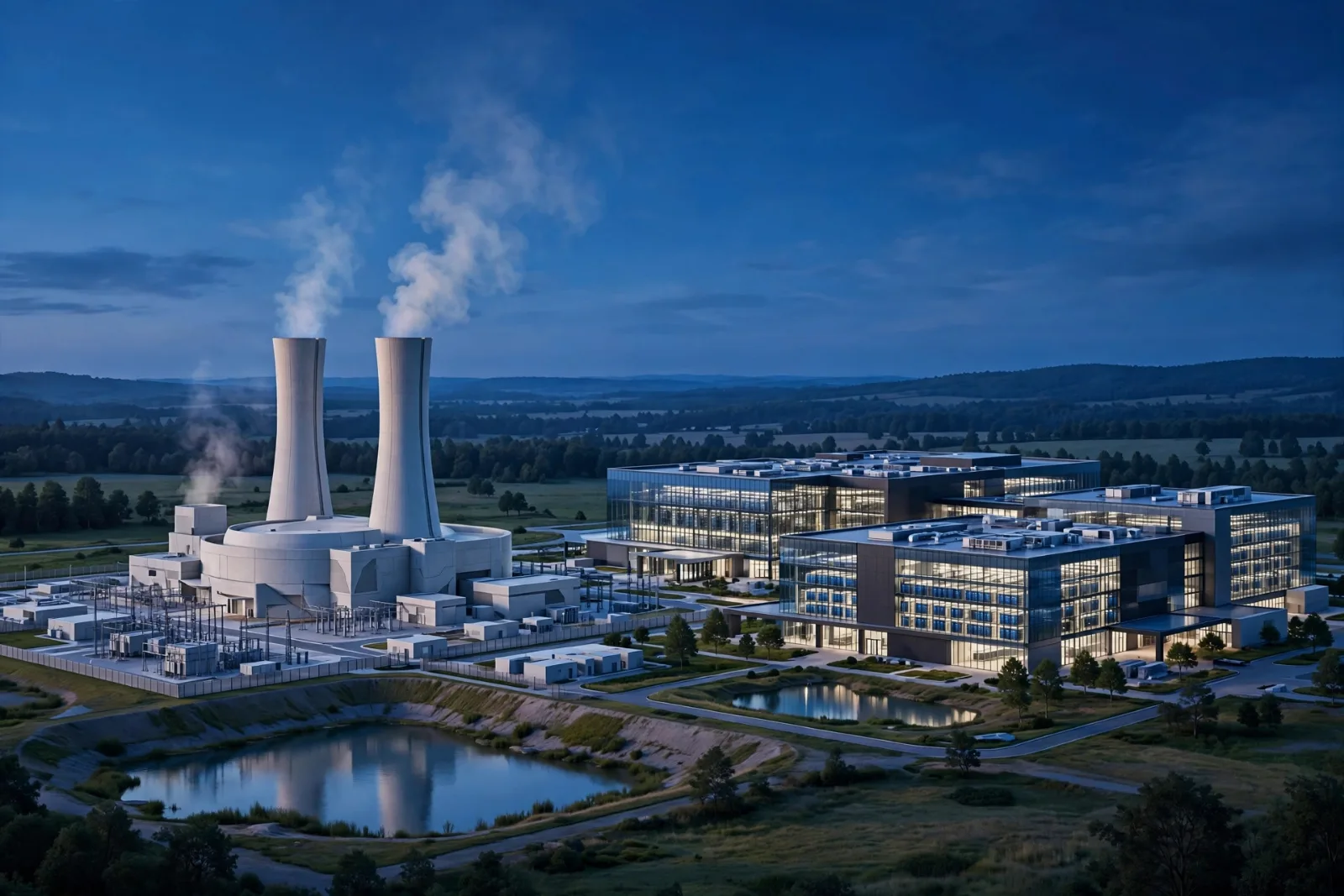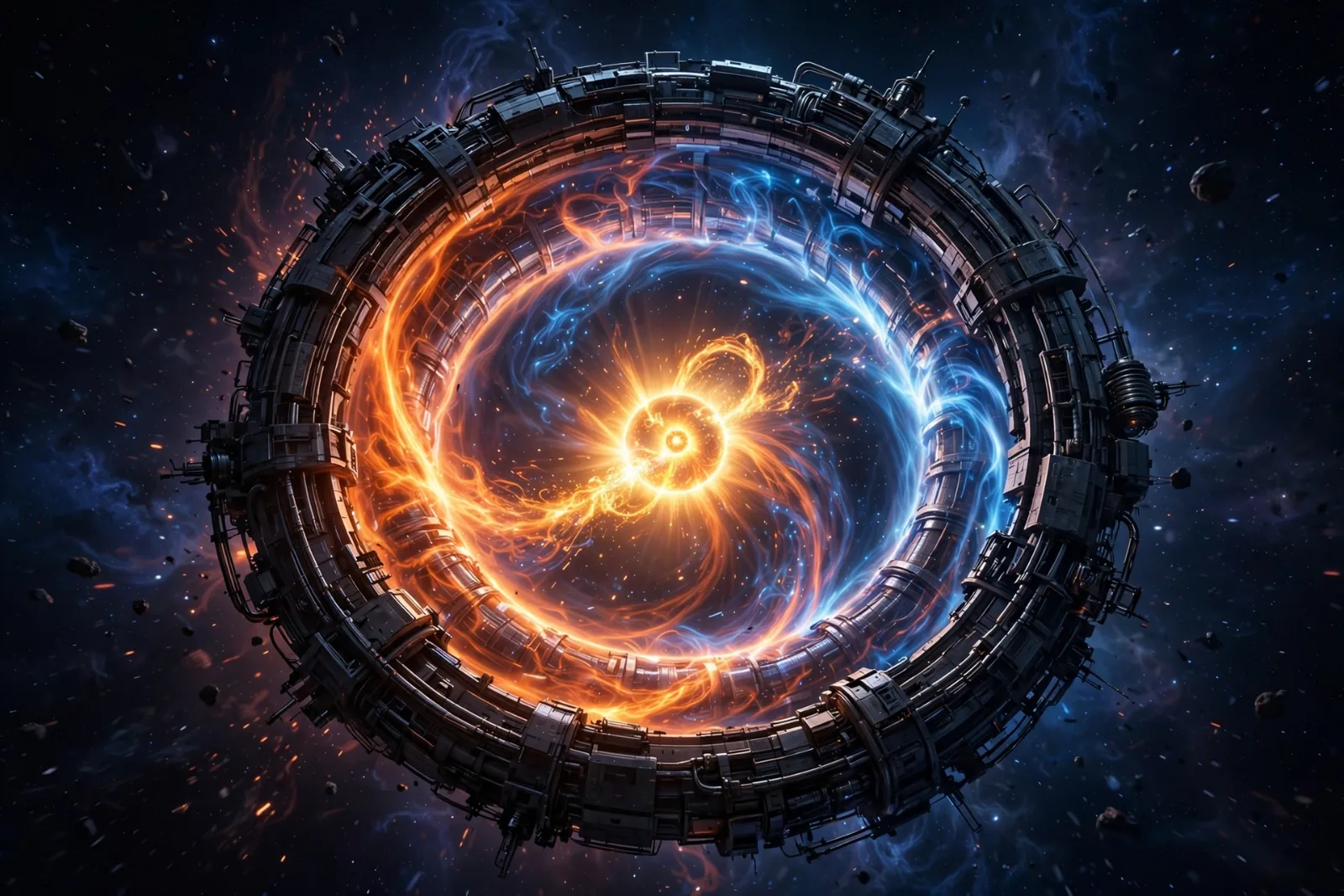
It's the punchline of an old joke: fusion power is 30 years away, and always will be. But in the last few years, something changed. Scientists have now achieved fusion ignition — getting more energy out of a fusion reaction than they put in — eleven times. Billions in private investment are flowing in, and the first commercial plants are projected for the 2030s.
So what is fusion, why is it so hard, and is the joke finally over? Here's the plain-English guide.
What is fusion?
Fusion is the opposite of fission (the process in today's nuclear plants). Instead of splitting heavy atoms apart, fusion smashes light atoms together to form a heavier one — releasing enormous energy in the process.
It's what powers the sun and every star: hydrogen atoms fusing into helium at temperatures of 15 million°C. The appeal is staggering:
- Fuel is abundant. Fusion uses isotopes of hydrogen (deuterium from seawater, tritium bred from lithium) — a bathtub of seawater holds as much fusion energy as hundreds of tons of coal.
- No carbon emissions. The reaction produces helium — an inert gas.
- No meltdown risk. Unlike fission, fusion reactions stop instantly if conditions aren't perfect. There's no runaway chain reaction to lose control of.
- Minimal long-lived waste. Fusion doesn't produce the thousands-of-years waste that fission does.
Why is it so hard?
If the fuel is seawater and the physics is the sun's, why did it take 70 years? Because recreating the sun on Earth means solving three brutal problems at once — the triple product:
- Temperature: plasma must reach 100+ million°C — hotter than the sun's core (Earth has no gravity to help, so we need it even hotter).
- Density: enough fuel atoms packed together to collide.
- Confinement time: holding it all together long enough for reactions to sustain.
Miss on any one of the three and you get an expensive light show instead of a power plant. And the container can't touch the plasma — nothing on Earth survives 100 million degrees — so "containers" are magnetic fields or laser implosions.
The two main approaches
| Magnetic confinement | Inertial confinement | |
|---|---|---|
| How | Giant magnets hold plasma in a donut-shaped chamber (tokamak) | Lasers crush a fuel pellet from all sides in a billionth of a second |
| Example | ITER (France), China's EAST tokamak | NIF (California) |
| Strength | Steady, continuous operation | Proven ignition |
| Challenge | Enormous, complex magnets; materials must survive neutron bombardment | Firing 10 laser shots per second (NIF fires a few per day) |
The breakthroughs that changed everything
- December 2022: the U.S. National Ignition Facility (NIF) achieved ignition for the first time — more fusion energy out than laser energy in.
- 2025–2026: NIF made it routine — 11 ignitions total, including a shot producing 8.6 megajoules with a gain factor of ~4.1 (April 2025) and 7.9 MJ at ~3.8× gain (June 2026).
- January 2026: China's EAST tokamak shattered the Greenwald density limit — a theoretical barrier that constrained fusion for decades — published in Science Advances.
- October 2026: China's ENN Group announced hydrogen-boron fusion reactions in its EXL-50U reactor — a cleaner variant that produces no neutron radiation at all.
- February 2026: Helion Energy became the first private company to demonstrate deuterium-tritium fusion reactions.
- Money: Commonwealth Fusion Systems raised $863 million, Pacific Fusion raised $900 million, and the UK committed £2.5 billion over five years.
How close are we, really?
Honest answer: closer than ever, but not tomorrow.
Ignition in a lab is not a power plant. A commercial reactor must ignite repeatedly, reliably, and cheaply — firing every second, converting heat to electricity, breeding its own tritium fuel, and doing it all at a cost that beats solar and wind.
Current projections put the first commercial fusion plants in the 2030–2035 window, with wider deployment in the late 2030s. That's still a projection, not a promise — but it's the first timeline backed by repeated ignition, serious money, and maturing regulation (the U.S. proposed a dedicated fusion regulatory framework in February 2026).
The takeaway checklist
- Fusion fuses light atoms (like the sun); fission splits heavy ones (today's plants).
- Fuel comes from seawater — nearly limitless, no carbon, no meltdown risk.
- The hard part: 100M°C+ plasma, held together without touching anything.
- Two approaches: magnetic tokamaks (steady) vs. laser implosion (proven ignition).
- NIF has ignited 11 times; China broke a decades-old density limit; private startups are racing.
- Realistic timeline: first commercial plants in the 2030s — the "always 30 years away" joke is finally aging.
Fusion won't save us from climate change this decade. But for the first time in history, the question isn't whether it works — it's how fast we can build it.
*Curious about the energy tech already here? Read Renewable Energy Technology — and for the chips that might one day simulate fusion plasmas, Semiconductors Explained.