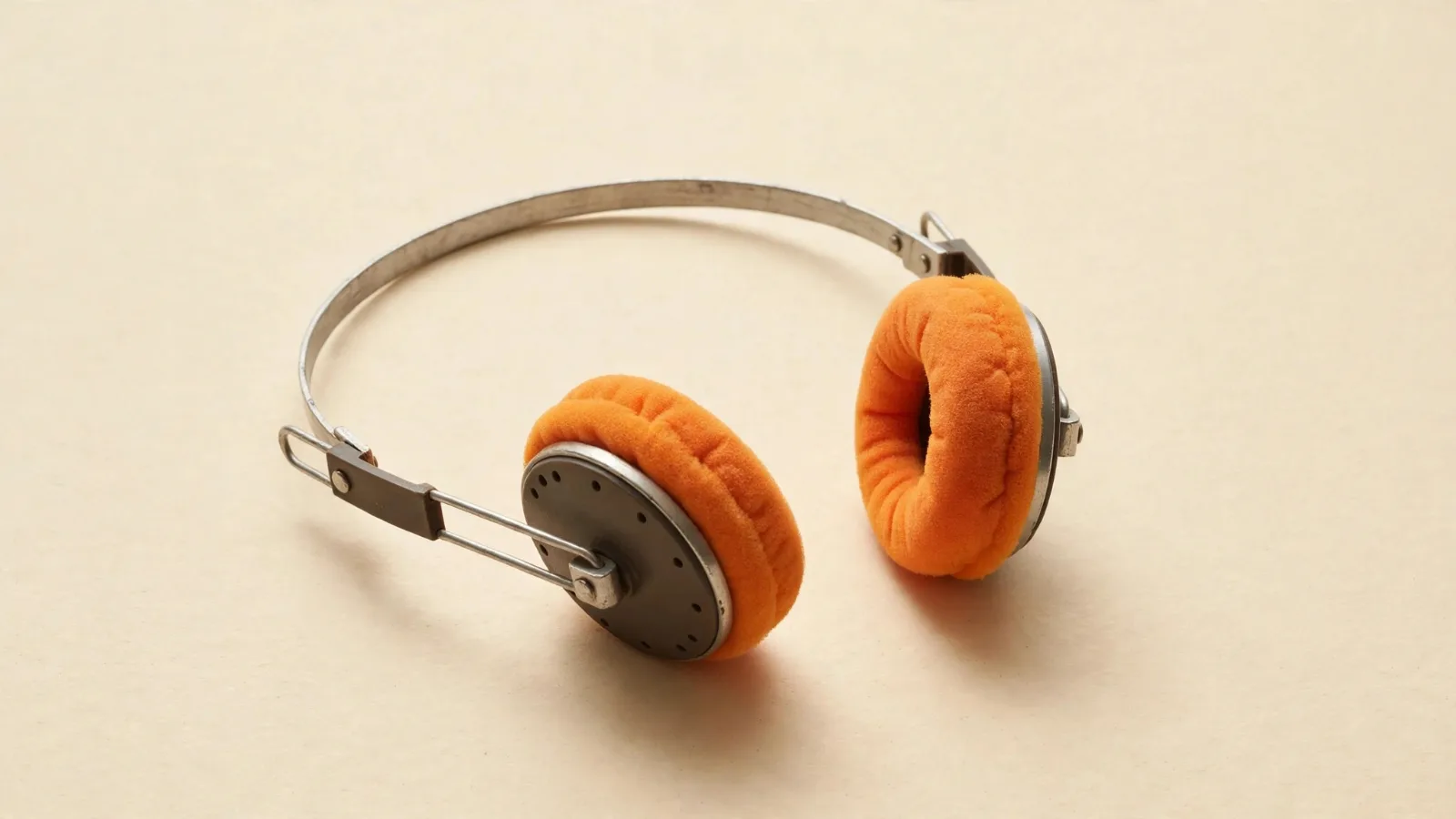
In 1979, Sony changed music forever with the Walkman TPS-L2, the first portable cassette player you could carry in your pocket. Tucked into the box was a pair of featherweight foam-padded headphones called the MDR-3L2. They looked flimsy, sounded airy, and became one of the most recognisable designs in audio history.
On 5 November 2026, Sony brought them back. The new MDR-3R is a near-faithful recreation of those 1979 headphones — same thin metal headband, same hole-pattern earcups, same bright blue and orange foam pads — with one very 2026 change: the cable ends in USB-C instead of a 3.5mm jack. The price is $59.99, and they are on sale now.
It is a strange, charming product: a 47-year-old design, rebuilt for phones that no longer have headphone jacks. Here is what Sony actually changed, what it deliberately did not, and whether $60 of nostalgia is worth your money.
What Sony announced
Sony announced the MDR-3R on 5 November 2026, and the headphones went on sale the same week through Sony's own store, Amazon, Best Buy and other authorised dealers. There are two versions:
- MDR-3R (standard) — silver headband, blue and orange swappable foam earpads, $59.99
- MDR-3R Stranger Things Edition — same headphones with a Stranger Things logo on the headband and black and red earpads, $79.99, available for pre-order
The $20 premium on the special edition buys the branding, not better sound — Sony lists no performance difference between the two.
The original: a 1979 icon
To understand why anyone cares about a pair of $60 wired headphones in 2026, you have to understand the original. The first Walkman, the TPS-L2, launched in Japan in July 1979, and the MDR-3L2 headphones shipped with it. At the time, headphones were big, heavy things you wore at home. Sony's pair weighed almost nothing — the new MDR-3R weighs 38 grams, two grams less than the original — and sat lightly on your ears with foam pads instead of clamping around them.
The design became a visual shorthand for portable music itself: the thin metal band, the open earcups with their ring of holes, the orange foam. Sony says it went back to the original 1979 design drawings to recreate the MDR-3R, and even remade the packaging and instruction manuals to mirror the 1979 release.
What is new in the MDR-3R
Under the retro skin, a few things have genuinely changed:
- USB-C instead of 3.5mm. The cable now ends in a USB-C plug, so it connects directly to modern phones, tablets and laptops with no dongle, no battery and no Bluetooth pairing. The audio travels as a digital signal through a small chip in the cable.
- Re-engineered 23mm drivers. Sony rebuilt the same 23mm drivers as the original, aiming to reproduce a sound close to the 1979 pair, with what it calls subtle refinements "to suit modern listening preferences". Reviewers who have tried them describe the sound as light and open, much like the original — pleasant, but not detailed by modern standards.
- A built-in microphone and in-line remote. The cable now has a mic for phone calls and a small remote with a volume knob — two things that definitely did not exist in 1979.
- Swappable foam pads in the box. Both the blue and orange earpads are included, so you can swap the look.
What is deliberately missing
Just as important is what Sony left out. The MDR-3R has:
- No battery. There is nothing to charge, ever.
- No Bluetooth. It is wired only — no pairing, no app, no firmware updates.
- No active noise cancelling. The open, foam-pad design lets the world in, exactly like the original.
- No 3.5mm plug. This is the one that catches people out: you cannot plug these into an old stereo, an aeroplane seat jack, or most audio equipment without an adapter.
- No folding hinges or carrying case.
That simplicity is the point. There is no app to install, no codec menu to argue with, and nothing that can run out of power halfway through a song. It is the opposite approach to modern noise-cancelling headphones, which use microphones and processing to block the world out — the MDR-3R just lets the world in.
The catch Sony admits itself
There is one genuinely funny footnote. Buried in Sony's own fine print is a warning that the MDR-3R is not recommended for use with Sony's current Walkman players — because those players still use 3.5mm and balanced 4.4mm jacks, not USB-C audio. Sony's support guidance even notes possible volume-control problems when USB headphones are used with current Walkmans.
So the headphones that celebrate the Walkman do not, strictly speaking, work with a Walkman. It is a small irony, and an honest one: this product is for your phone and laptop, not for a tape player.
1979 vs 2026: what changed
| Feature | Original MDR-3L2 (1979) | MDR-3R (2026) |
|---|---|---|
| Connector | 3.5mm jack | USB-C |
| Drivers | 23mm | Re-engineered 23mm |
| Weight | ~40g | 38g |
| Microphone | None | Built-in, with in-line remote |
| Earpads | Orange foam | Blue and orange, swappable |
| Battery / Bluetooth | None | None |
| Price | Bundled with the Walkman | $59.99 ($79.99 Stranger Things) |
Who should buy them — and who should not
Buy them if: you love the design, you want the lightest possible wired headphones for calls and casual listening, or you are tired of charging things. At 38 grams they are genuinely among the lightest headphones you can buy, and the "just plug it in and it works" simplicity is real.
Skip them if: sound quality per dollar is your priority. As Gizmodo's review put it, if the nostalgia does nothing for you, there are better ways to spend $60 on audio. You also should skip them if you need noise cancelling, wireless freedom, or a 3.5mm plug for older gear.
Why this is happening now
Wired headphones are having a small renaissance. As phones dropped the headphone jack, a generation discovered that Bluetooth means charging, pairing and latency — and that a wire simply works. If you want the wireless side of the story, our guide to how Bluetooth actually works explains the radio tech behind it. Sony is not the only company mining its own history, but it is the only one that can sell you the actual headphones from the first Walkman, rebuilt from the original drawings, for the price of a decent dinner.
The MDR-3R will not change how the world listens to music. The original did that in 1979. This one just lets you wear a piece of that history — with a plug that fits the phone in your pocket.
Takeaway checklist
- What it is: Sony's MDR-3R, a recreation of the 1979 Walkman headphones, announced 5 November 2026.
- Price: $59.99 standard, $79.99 for the Stranger Things Edition; on sale now.
- The big change: USB-C instead of a 3.5mm jack — plug straight into a modern phone or laptop.
- What stayed the same: 23mm drivers, 38g weight, thin metal headband, blue and orange foam pads.
- What it lacks: no battery, no Bluetooth, no noise cancelling, no 3.5mm plug.
- The quirk: Sony says it is not recommended for use with current Walkman players.
- Bottom line: buy it for the design and the simplicity, not for best-in-class sound.
For the bigger picture, see our guide to wearable technology.
For more on this, see our explainer on HomePod.